Gamelan Instruments: A Beginner’s Guide for Australian Travellers
We still remember the first time we heard gamelan. It was a sticky Tuesday night in Ubud, somewhere behind the art market stalls, and a group of musicians were warming up under a corrugated roof. We had expected something soft and ambient — the kind of spa soundtrack that gets piped through Bali resorts. What we got was a wall of bronze: hammering, shimmering, clanging, then suddenly dropping to a whisper before crashing back in. It sounded like rain on a tin roof crossed with a flock of metallic birds. We stood there for twenty minutes with our satay going cold, completely hooked.
That moment is what this guide is for. If you are an Australian traveller heading to Bali and you have booked — or are about to book — a Legong, Kecak, or Barong performance, understanding gamelan will change the entire experience. Let us walk you through it.
What Is Gamelan? A Quick Balinese Primer
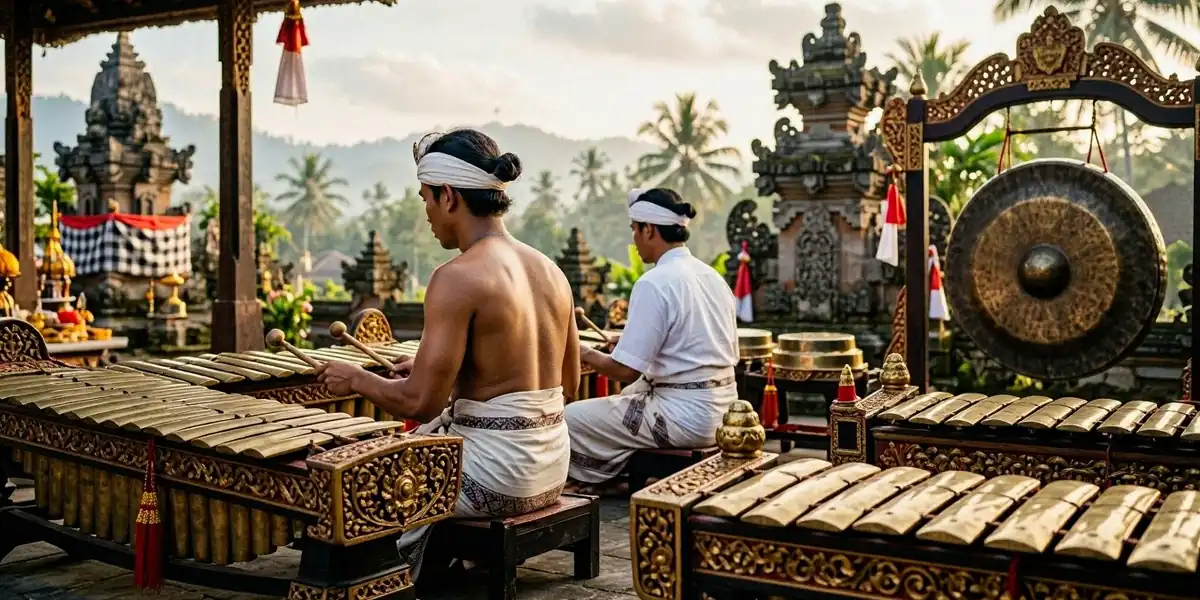
Before we go further, let us clear up the most common confusion. Gamelan is not a single instrument you can point at on a stage. It is the whole orchestra.
Gamelan as an Ensemble, Not an Instrument
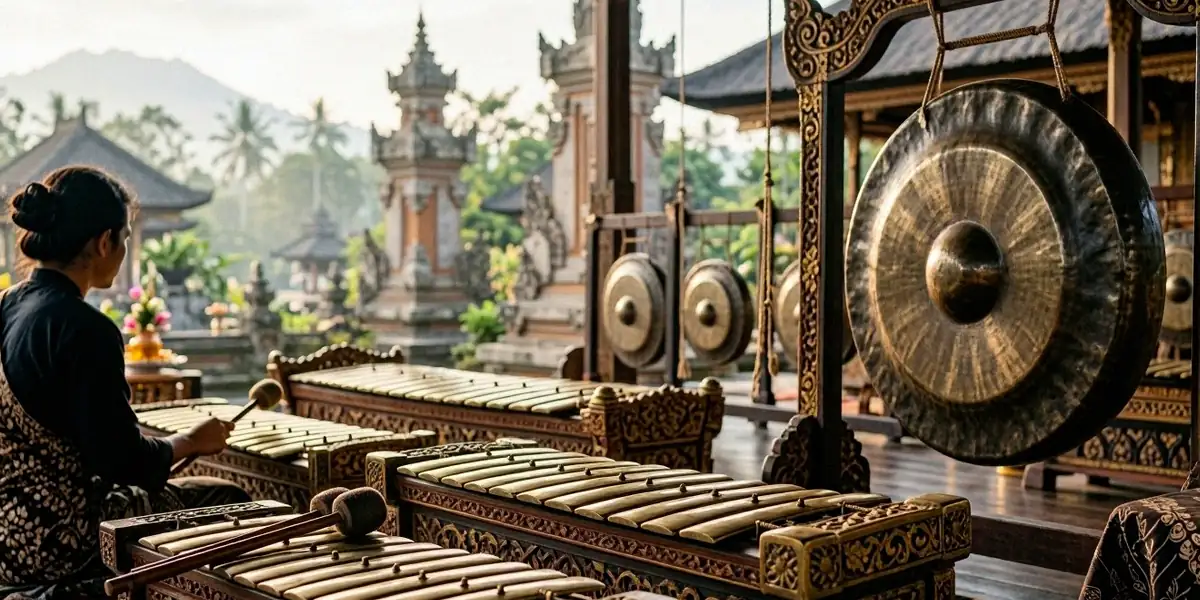
The word “gamelan” refers to a set of instruments played together as one ensemble. In Bali, that usually means a collection of bronze metallophones, gongs of various sizes, drums, and flutes, all housed together and often treated as a single entity. A gamelan set is not assembled piece by piece from a catalogue — it is cast and tuned as a matched unit, so every instrument in the ensemble is in tune with every other one. You cannot swap a metallophone from one gamelan into another and expect it to sound right.
This matters because it explains why gamelan sounds so unified. The instruments are literally built for each other.
Gamelan is inseparable from Balinese Hindu ceremony. It accompanies temple processions, cremations, odalan (temple anniversary) celebrations, and wayang kulit shadow puppet performances. It also drives the tourist performances that most visitors see, which is where Australian audiences usually encounter it first. Closer to home, the Perth-based Australian gamelan group Sekar Langit has been performing and teaching for years, giving West Australians a taste of the same bronze sound without the flight.
Where You Will Hear Gamelan in Bali
In practice, you will run into gamelan in a few distinct settings:
- Temple ceremonies and odalan celebrations, where the ensemble plays for hours
- Tourist dance performances in Ubud, Denpasar, and Uluwatu
- Hotel and resort cultural nights, which vary wildly in quality
- Community banjar halls, where locals rehearse in the evenings
- Shadow puppet (wayang kulit) shows, often late at night
If you hear hammering bronze drifting out of a side street after dark, follow it. You will almost always be welcome to watch from a respectful distance.
The Core Gamelan Instruments You Will See and Hear
Balinese gamelan is built around four instrument families: gongs, metallophones, drums, and flutes. Once you can pick these apart by ear, the music stops sounding like a wall of noise and starts sounding like a conversation.
Gongs and the Deep Pulse: Gong Ageng and Kempur
The gong ageng is the largest gong in the ensemble and the anchor of the whole piece. When it sounds, it marks the end of a major cycle. The kempur is a smaller, higher gong that punctuates shorter phrases. Together with other gongs like the kempli and the small, hand-held kemong, they create the structural skeleton of a gamelan composition. If you can follow the gong ageng, you can follow the music.
Metallophones: Ugal, Kantilan, and Pemade
This is where the melody lives. The ugal is the lead instrument, playing the core melody that the rest of the ensemble elaborates on. The kantilan and pemade are smaller, higher metallophones that play faster, more ornamented versions of that melody. In a good ensemble, you will hear the same tune running at three or four different speeds simultaneously — slow in the ugal, rapid and sparkling in the kantilan. It is one of the most distinctive sounds in Southeast Asian music.
Drums and Flutes: Kendang and Suling
The kendang is a double-headed drum played with the hands, and it functions as the conductor of the ensemble. The drummer signals tempo changes, transitions, and dramatic accents — especially important during dance performances, where the kendang and the dancer are in constant dialogue. The suling is a bamboo flute that adds a thin, breathy melodic line, often floating above the bronze texture.
One more thing worth knowing: gamelan sets are tuned to one of two scale systems, slendro (roughly five-note) or pelog (roughly seven-note). We will come back to that.
How Gamelan Fits with Legong, Kecak, and Barong
The three dance forms most Australian travellers book tickets for each use gamelan in a completely different way. Knowing which ensemble you are hearing tells you a lot about what you are watching.
Gamelan for Legong: Pelog Semar Pegulingan
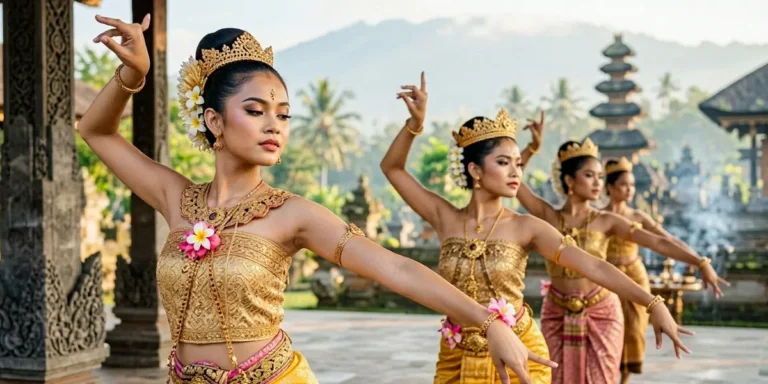
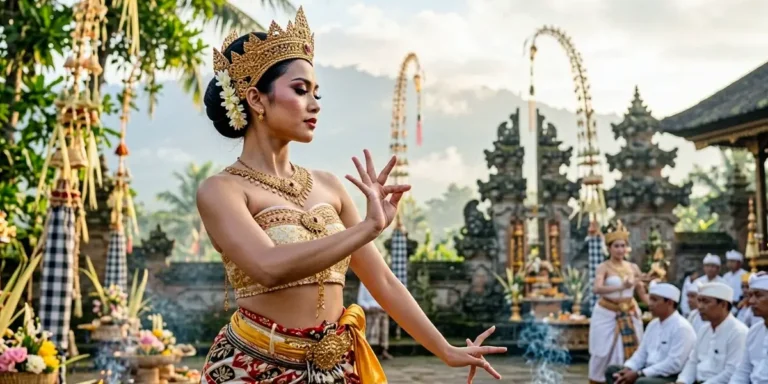
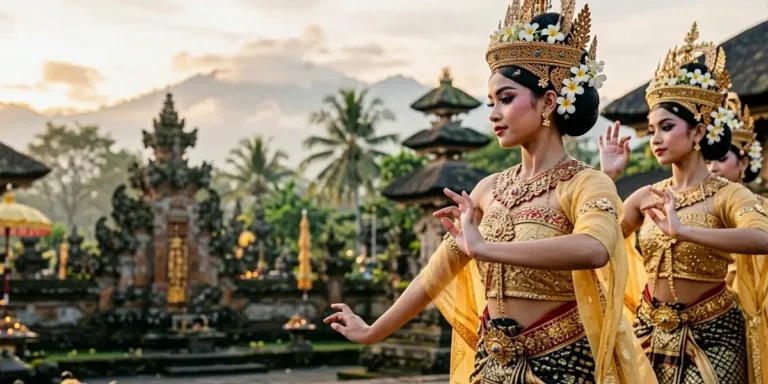
Legong is the refined, classical dance of young female performers, and in Ubud it is typically accompanied by a pelog semar pegulingan ensemble. This is a softer, more delicate gamelan than the loud, ceremonial sets, and it suits Legong’s controlled, precise movement. If you book a Legong performance in Ubud, listen for the shimmering high metallophones and the relatively gentle dynamic range — that is the semar pegulingan sound.
Gamelan for Barong: Batel and Bebonangan
Barong is the dramatic masked dance of the lion-like Barong and the witch Rangda, and it uses gamelan batel, a livelier and more rhythmically urgent ensemble. The music shifts constantly to match the action — comic interludes, sudden tension, and the famous keris scene where dancers turn blades on themselves. Gamelan bebonangan, a processional style, often accompanies Barong when it moves through streets or temple grounds.
Kecak and the Human Gamelan
Kecak is the odd one out. There is no gamelan at all — instead, a chorus of dozens (sometimes over a hundred) men provides the entire soundscape. They chant “cak” in interlocking rhythms that are directly borrowed from gamelan structures. If you already understand kotekan (see below), you will hear the same technique performed with human voices. It is one of the most extraordinary things you can witness in Bali, and it makes far more sense once you understand the gamelan logic underneath it.
What to Listen For: A Beginner’s Ear Training
You do not need musical training to hear gamelan properly. You just need to know what to focus on.
Kotekan: The Interlocking Magic
Kotekan is the technique where two musicians play interlocking patterns that combine into a single, fast melodic line. Neither player performs the full melody alone — they trade notes back and forth at high speed, and together they create something neither could play solo. Once you hear it, you cannot unhear it. Watch the hands of two metallophone players sitting side by side and try to follow who plays which note.
Gong Cycles and Timekeeping
Gamelan is built on repeating cycles, marked by the big gongs. The gong ageng typically marks the longest cycle, with smaller gongs marking subdivisions. If you tap your foot along to the gong ageng, you will start to feel the architecture of the piece. This cyclical structure is why gamelan can go on for hours without feeling repetitive — the cycle keeps turning, but the ornamentation keeps changing.
Slendro vs Pelog: Hearing the Difference
Slendro and pelog are the two tuning systems you will encounter. Slendro has five roughly equal intervals and sounds open and even. Pelog has seven unequal intervals and sounds more colourful, with wider gaps between some notes. You do not need perfect pitch — just listen for whether the melody feels evenly spaced or slightly lopsided. Pelog usually sounds more dramatic to Western ears.
If you want to go hands-on, Ubud’s Pondok Pekak Library runs free gamelan workshops where visitors can try the instruments. And if you are based in Victoria, Gamelan DanAnda in Melbourne hosts regular community sessions where you can learn properly.
Gamelan Etiquette and Where to Learn in Australia
Gamelan is not a concert hall tradition. It is functional, sacred, and community-based, and a little awareness goes a long way.
At the Performance: Dos and Don’ts
- Do dress modestly, especially at temple performances — a sarong and sash are often required
- Do stay for the whole performance if you can; walking out mid-piece is noticed
- Do ask before taking photos during a ceremony
- Don’t step over instruments or place bags on them — gamelan is treated with respect
- Don’t talk loudly or take phone calls during a temple performance
- Don’t assume a tourist show and a temple ceremony have the same rules
Joining a Gamelan Group Back Home
Australia has a surprisingly active gamelan scene. Sydney, Melbourne, Perth, and Brisbane all have community groups, and many welcome complete beginners. The Australian Gamelan and Puppetry Association is the best starting point — it connects players, teachers, and ensembles across the country and is a genuine resource for travellers who want to keep learning after their Bali trip. If you have ever tapped along to a gamelan performance and thought “I want to try that,” you can.
FAQ
Is gamelan the same as a gamelan orchestra?
Yes, in everyday usage. “Gamelan” refers to the ensemble itself, so saying “gamelan orchestra” is slightly redundant but widely understood. In Bali, people usually just say “gamelan.”
Do I need to understand music theory to enjoy gamelan?
Not at all. Knowing a few basics — the gong cycle, kotekan, and the difference between slendro and pelog — is enough to transform how you hear it. The rest is just listening.
Which Balinese dance should I see first?
Legong is the most accessible introduction, especially in Ubud where the pelog semar pegulingan accompaniment is refined and the venues are comfortable. Kecak is the most spectacular. Barong is the most dramatic. If you have time, see all three.
Can I learn gamelan in Australia?
Yes. Community groups operate in Sydney, Melbourne, Perth, and Brisbane, and the Australian Gamelan and Puppetry Association can point you toward the nearest one. Melbourne’s Gamelan DanAnda and Perth’s Sekar Langit are both good examples of active Australian ensembles.
Is it okay to watch a temple gamelan performance as a tourist?
Usually yes, provided you dress respectfully, keep quiet, and follow any instructions from temple staff. Never enter a sacred inner courtyard without permission, and always ask before photographing ceremonies.
Gamelan is not background music. It is the heartbeat of Balinese dance — the thing that tells the dancer when to move, when to pause, and when to strike. Book a performance early in your Bali itinerary, ideally in your first few days, because once you have heard gamelan live, you will hear it differently for the rest of your trip. And who knows — you might come home and join a gamelan group in your own city.