Kecak at Uluwatu: Tips for the Sunset Show
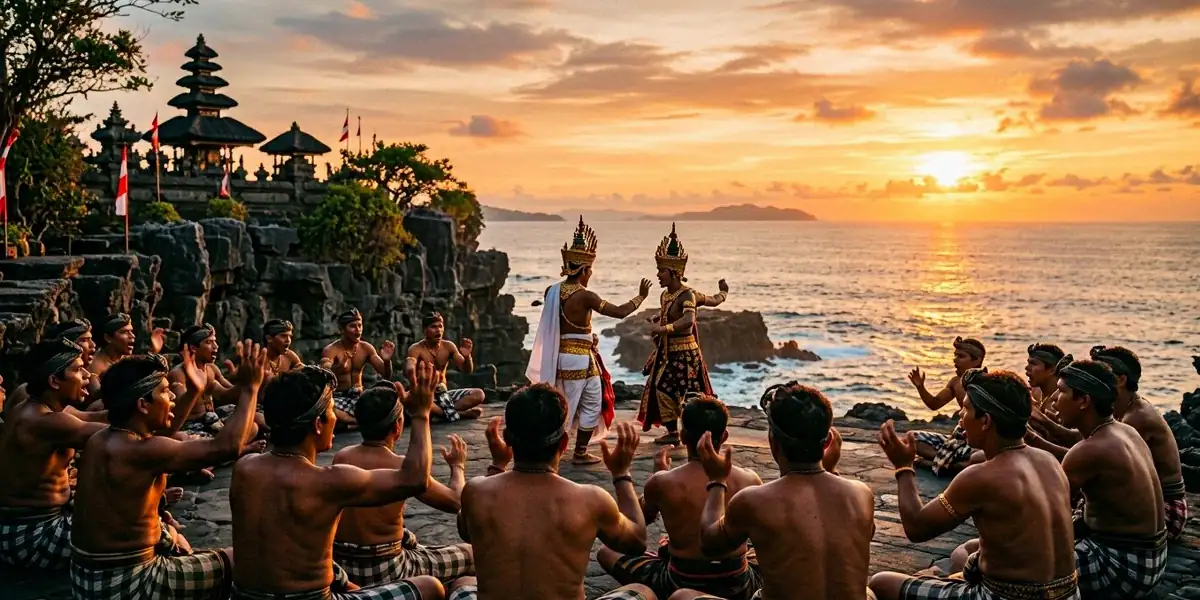
We still remember the first time we heard it — that hypnotic “cak-cak-cak” rising and falling in waves as the sun dropped behind the Indian Ocean. We were perched on a stone amphitheatre at Uluwatu Temple, surrounded by hundreds of other travellers, watching a circle of men chant in perfect rhythm while the sky turned orange and pink. It’s one of those Bali moments that stays with you long after you’ve flown home. If you’re an Australian planning a trip to Bali, this is the guide we wish we’d had before our first Kecak show.
Why Kecak at Uluwatu Is a Must-See for Aussies
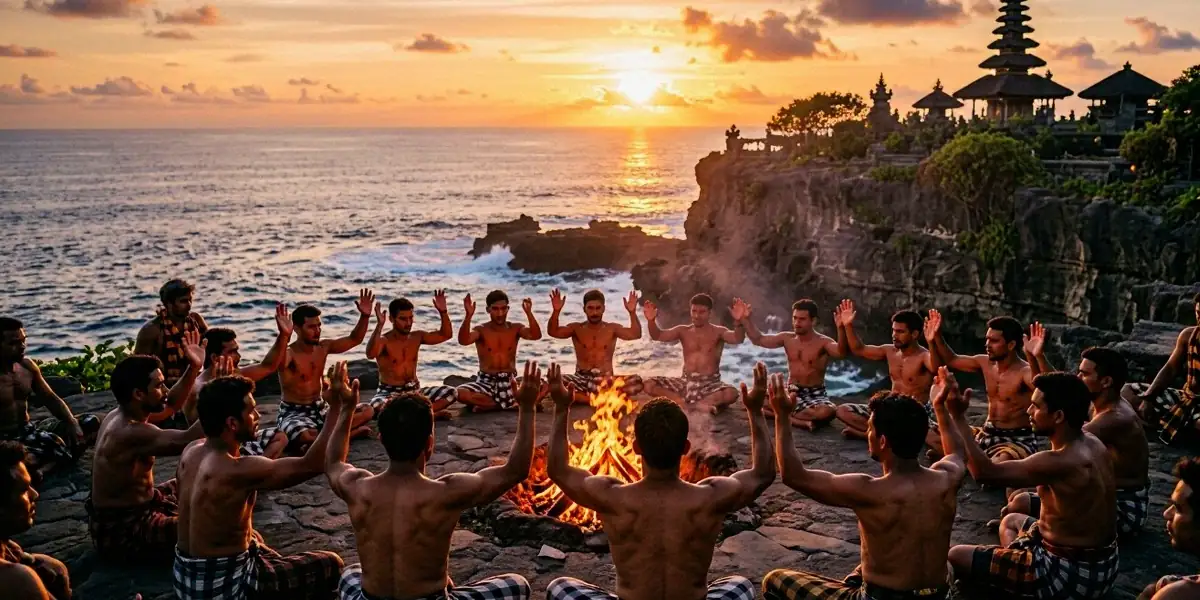
Most Australians come to Uluwatu for the surf breaks, the clifftop bars, and those famous sunsets. Fair enough. But the Kecak fire dance adds something the beach clubs can’t: a genuine Balinese cultural performance staged against one of the most dramatic backdrops on the island. It’s not a watered-down resort show — this is a temple-side ritual-turned-performance that has been drawing crowds for decades.
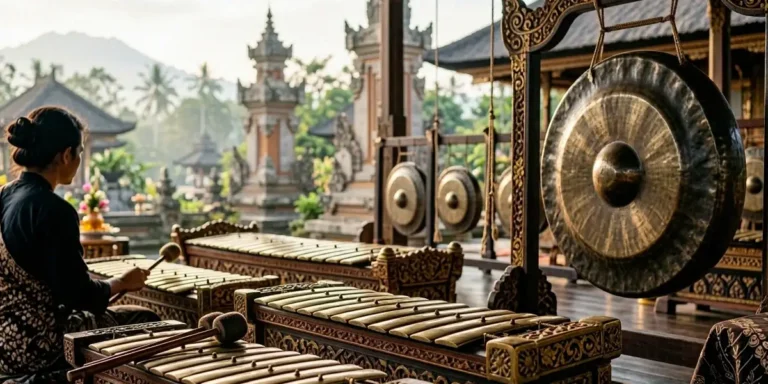
What makes Kecak stand out from other Balinese dances is that it doesn’t use a gamelan orchestra. Instead, a chorus of around 50 to 100 men provides the entire soundtrack with their voices, chanting “cak” in interlocking rhythms. That’s why it feels so different from a Legong or Barong performance, which are both accompanied by gamelan instruments. If you’ve already seen Legong at Ubud Palace or a Barong dance in Batubulan, Kecak will feel like a completely different experience.
The Cliffside Setting and Sunset Backdrop
The open-air amphitheatre sits just below Uluwatu Temple, which is located in Pecatu, South Kuta. From the seating, you look out over a 70-metre cliff edge to the ocean. As the show begins around 6pm, the sun sets directly behind the performers — it’s genuinely one of the best sunset vantage points in Bali. Arrive early enough and you’ll also get to walk the temple grounds and see the famous clifftop views before taking your seat.
Kecak vs. Other Balinese Dances: What to Expect
If you’re comparing cultural shows, here’s the short version:
- Kecak — human chorus only, no instruments, Ramayana story, fire finale, cliffside setting at Uluwatu.
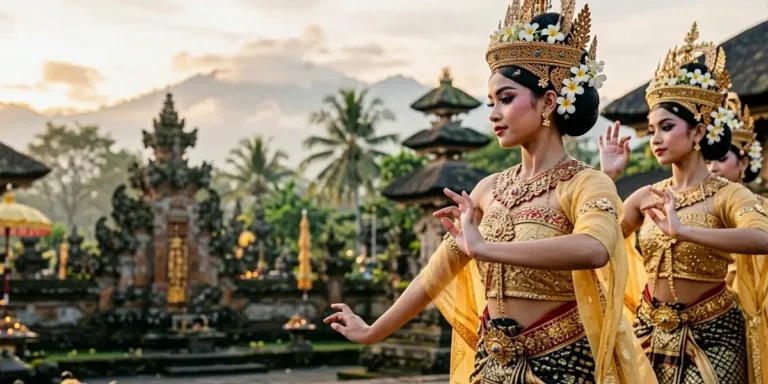
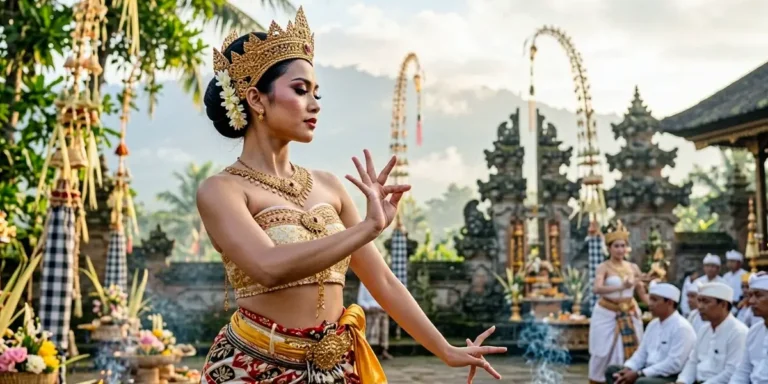
- Legong — performed by young female dancers, accompanied by gamelan, usually seen in Ubud.
- Barong — masked dance depicting the battle between good and evil, gamelan-accompanied, often performed in villages like Batubulan.
All three are worth seeing, but Kecak is the one that pairs best with a sunset and a temple visit.
When to Go and How to Get Tickets
The show runs daily from 6pm to 7pm, but we strongly recommend arriving by 5pm. That gives you time to buy tickets, find a good seat, and soak in the sunset before the performance starts. Seating is on a first-come, first-served basis, so the earlier you arrive, the better your view.
Best Time to Arrive for Sunset Views
Aim to be at the temple entrance by 4:30pm to 5pm. This lets you walk the clifftop path, spot the monkeys, and settle into the amphitheatre before the crowds build. During peak season (July and August), the show regularly sells out, so arriving late could mean missing out entirely.
Buying Tickets: Online vs. On-Site
Tickets cost around IDR 100,000 to 150,000 per person. You can buy them at the temple entrance on the day, or pre-book through agents like Klook if you want to guarantee a spot. We usually recommend booking online during peak season — it saves queueing and removes the risk of a sell-out. Bring cash in Indonesian rupiah either way, as on-site ticket counters don’t always accept card.
What to Expect During the Performance
The show lasts about an hour. A circle of men — bare-chested, wearing checked sarongs — chant “cak” in layered rhythms while the story of the Ramayana unfolds in the centre. There are no instruments at all, just voices, which is what makes Kecak so distinctive compared to gamelan-accompanied dances like Legong or Barong.
The Ramayana Story Unfolds
The performance tells the epic tale of Prince Rama, his wife Sita, and his brother Lakshmana. Sita is kidnapped by the demon king Ravana, and Rama enlists the help of the monkey army — led by Hanuman — to rescue her. Even if you don’t follow every plot beat, the drama is easy to grasp through the dancers’ movements and the chorus’s intensity.
The Fire Finale and Chanting Chorus
The finale is the part everyone talks about. A performer dressed as Hanuman kicks through a pile of burning coconut husks, sending sparks into the night sky while the chorus reaches a fever pitch. It’s dramatic, a little chaotic, and genuinely memorable. Be aware that the seating area can get hot and crowded — bring water and dress lightly.
Practical Tips for Australian Travellers
We’ve learned a few things the hard way over multiple visits. Here’s what we’d tell any Aussie heading to Uluwatu for the show.
What to Bring and Wear
- Light, breathable clothing — it’s humid, even after sunset.
- A refillable water bottle; you’ll be sitting in the heat for over an hour.
- Insect repellent — mosquitoes come out at dusk.
- A light layer or sarong in case of a breeze on the cliff.
- Cash in IDR for tickets, drinks, and tips.
Getting There and Avoiding Monkey Mischief
Uluwatu Temple is about 45 minutes from Kuta and roughly 1.5 hours from Canggu, depending on traffic. We recommend arranging a private driver or using a ride-hailing app like Grab. Note that some temple areas restrict ride-hailing pickups, so confirm with your driver where to meet.
And a serious warning: the monkeys at Uluwatu are notorious for stealing sunglasses, hats, and phones. Secure your belongings, don’t dangle anything shiny, and keep your bag zipped. We’ve watched more than one tourist chase a macaque across the clifftop.
Finally, the show is outdoors. Check the weather forecast — if it’s raining heavily, the performance may be delayed or cancelled.
Etiquette and Cultural Respect
Uluwatu Temple is a sacred Hindu site, not just a tourist attraction. Treating it with respect makes the experience better for everyone — including you.
Temple Dress Code and Behaviour
A sarong and sash are provided with your ticket, and you’ll need to wear them throughout the temple grounds. Don’t stand higher than the priest during ceremonies, and avoid walking in front of anyone praying. Keep your voice down around the inner temple areas.
Photography Rules and Audience Conduct
Photos are generally fine during the performance, but flash photography is discouraged — it distracts the performers and can be disrespectful during sacred moments. Stay seated during the show, avoid standing in front of others for the perfect shot, and put your phone away during the opening prayers.
Is the Kecak Sunset Show Worth It?
Honestly? Yes. It’s crowded, it’s hot, and it’s undeniably touristy — but the combination of the cliff, the sunset, and that hypnotic chanting is something you won’t find anywhere else. Many Australians we’ve spoken to rate it as a highlight of their entire Bali trip.
Our Verdict: Pros and Cons
- Pros: Unmatched setting, unique vocal performance, dramatic fire finale, easy to combine with a temple visit.
- Cons: Crowded seating, hot and humid, monkey theft risk, can feel commercialised in peak season.
Combining with Other Uluwatu Attractions
We suggest arriving earlier in the day to explore Uluwatu Temple properly, then catching the show at sunset. Afterwards, head to one of the nearby clifftop restaurants or beach clubs for dinner. It makes for a full, well-rounded Uluwatu day.
While the Kecak show is undeniably on the tourist trail, it remains a powerful cultural experience. Watching that chorus of voices rise against the Indian Ocean as the sun disappears is something we believe every Australian visitor to Bali should witness at least once.
FAQ
How much do Kecak dance tickets cost at Uluwatu?
Tickets are around IDR 100,000 to 150,000 per person. You can buy them at the temple entrance or pre-book through Klook.
What time does the Kecak show start?
The show runs daily from 6pm to 7pm. Arrive by 5pm for sunset views and a good seat.
Do I need to bring cash?
Yes — bring Indonesian rupiah. On-site ticket counters and vendors may not accept cards.
Is the Kecak dance suitable for children?
Generally yes, though the fire finale and loud chanting can be intense for very young kids. Bring water and snacks.
What should I wear to Uluwatu Temple?
Light clothing with a sarong and sash, which are provided with your ticket. Avoid flashy jewellery that monkeys might grab.