Balinese Dance Explained: The Main Styles You’ll See in Bali
You’re sitting cross-legged on the stone floor of a temple courtyard at dusk. The air is thick with incense and the hum of conversation from the crowd around you. Then, without warning, the gamelan strikes up — a cascade of metallic, shimmering notes that seems to come from everywhere at once. Dancers emerge from the shadows in golden costumes, and you realise you have absolutely no idea what’s about to unfold. That’s the moment this guide is written for. We’re here to help you understand the Balinese dance you’re watching, so you can appreciate the ritual, the story, and the skill in front of you — not just the spectacle.
Why Balinese Dance Is Unlike Anything You’ve Seen
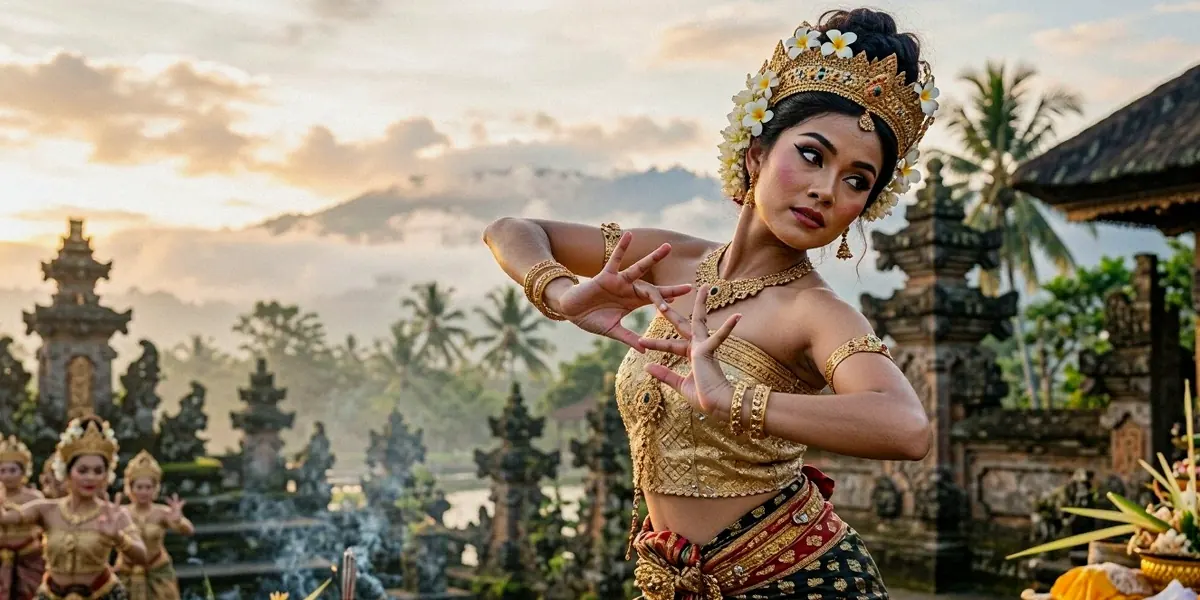
Balinese dance isn’t a show in the Western sense. It’s a living, breathing part of Balinese Hinduism, where movement, music, and offering are woven together. Many of these dances are performed for the gods, not for tourists — and that’s the single most important thing to understand before you take your seat. When you watch a performance, you’re not just a spectator; you’re a guest at something that has been practised for centuries, often in the same temple grounds where it’s performed today.
The Role of Dance in Balinese Hinduism
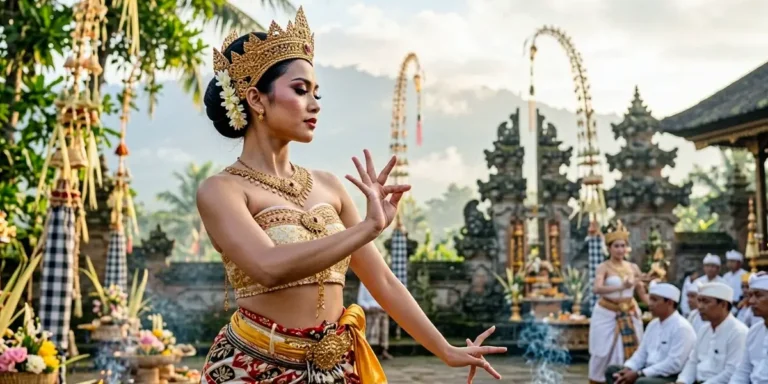
In Bali, dance is a form of devotion. Dances are performed during temple ceremonies (odalan), cremations, and rites of passage, and they’re offered to the deities as part of the ritual. The costumes, the offerings, the incense, the gamelan — all of it is part of a sacred exchange. Dancers are often in a trance, believed to be visited by spirits or ancestors. The dance is a bridge between the human world and the divine, and the audience is part of that ceremony, not separate from it.
How to Tell a Temple Dance from a Tourist Show
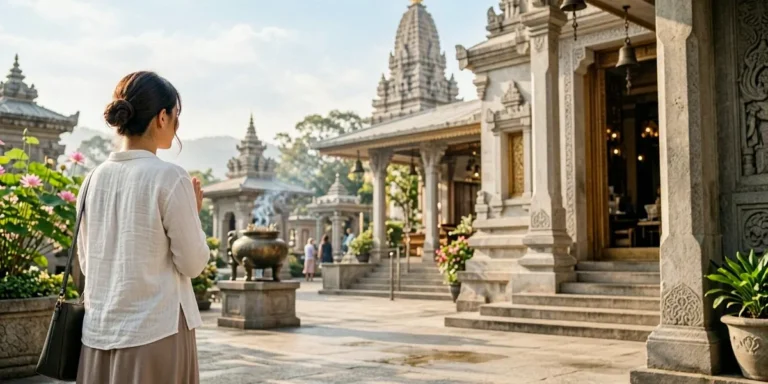
We’re often asked how to tell the difference. A temple dance is performed in a temple, during a ceremony, with local people attending as worshippers, and the audience is expected to dress modestly and behave respectfully. A tourist show is staged for visitors, often in a hotel or cultural venue, with a fixed ticket price and a more theatrical presentation. Both are worth seeing, but they’re different experiences. If you want to see the real thing, ask your hotel or a local guide about upcoming ceremonies — and always dress appropriately, with a sarong and sash.
Legong: The Jewel of Balinese Dance
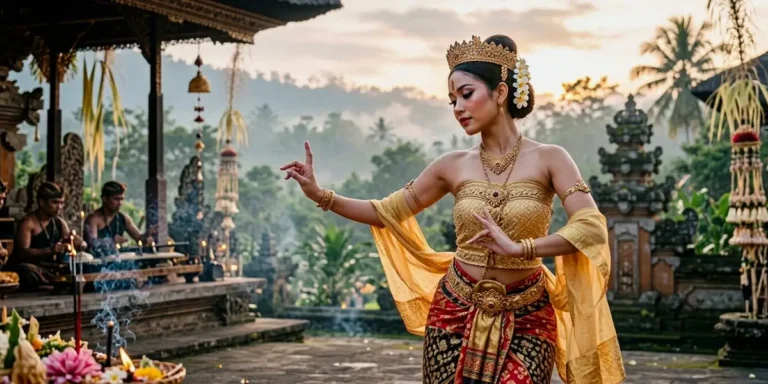
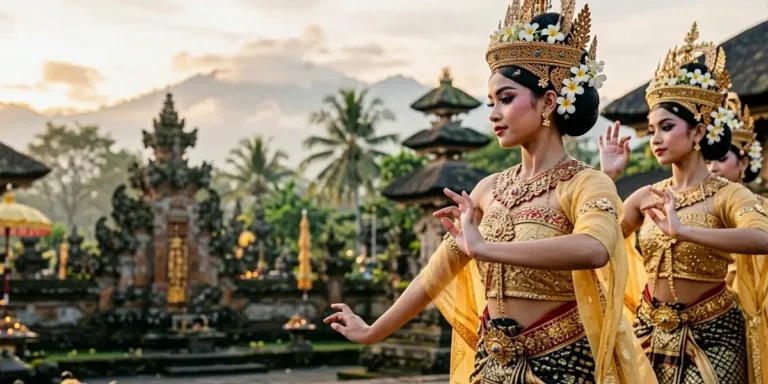
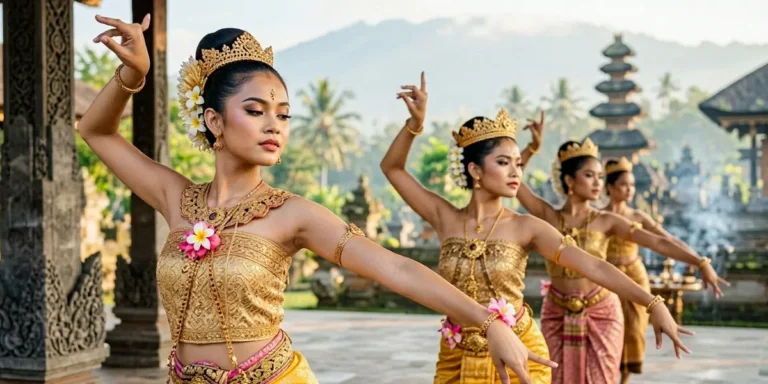
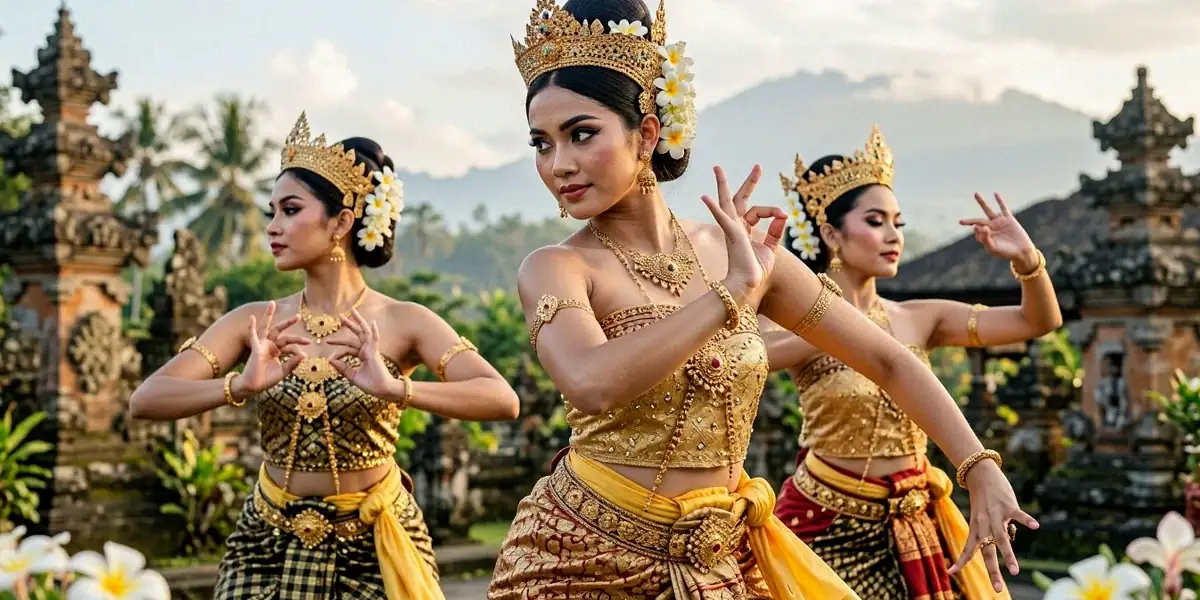
Legong is the most refined and iconic of the Balinese dance styles. Performed by young girls in golden costumes and elaborate headdresses, it’s a dance of extraordinary precision — the dancers’ fingers, eyes, and even the tilt of their heads are choreographed to the millisecond. Legong is often described as trance-like, and the movement is so controlled and fluid that it can feel almost hypnotic. It’s the dance most visitors picture when they think of Balinese dance, and it’s a great starting point.
The Story Behind Legong Lasem
The most famous Legong is Legong Lasem, which tells the story of the King of Lasem and his desire to marry the princess of Daha. It’s a tale of love, politics, and conflict, and the dancers enact it through a series of stylised movements rather than words. The story is told through the gamelan, the costumes, and the dancers’ gestures — and if you don’t know the plot, you’ll still be captivated by the beauty of the movement. It’s worth reading a short summary before you go, so you can follow the story.
Where to Watch Legong in Ubud
Ubud Palace is a top spot for Legong performances, and it’s a great introduction to the dance for visitors staying in the area. The palace hosts regular evening performances, and the setting — a traditional Balinese palace courtyard — adds to the atmosphere. Pura Dalem Ubud is another venue worth checking, and the performances there are often more closely tied to temple ceremonies. We recommend arriving early to get a good seat, and bringing a sarong to wear over your clothes.
Barong and Rangda: The Eternal Battle of Good and Evil
The Barong dance is often the first dance Australians see in Bali, and it’s a dramatic introduction. The Barong is a lion-like creature, a protective spirit, and the Rangda is the demon queen who represents chaos and evil. The two are locked in an eternal battle, and the dance is a ritual re-enactment of that struggle. The Barong dance is often performed in Batubulan village near Ubud, and it’s a popular stop on many day tours. The drama is intense, and the trance sequences are genuinely gripping.
The Characters: Barong, Rangda, and the Monkeys
The Barong is played by two dancers who move as one, and the creature is covered in a shaggy mane and a mask with bulging eyes. The Rangda is a terrifying figure with long, wild hair and a mask with fangs. The monkeys (often played by dancers in monkey masks) are the Barong’s followers, and they add a chaotic, playful element to the performance. The characters are archetypes — good, evil, and the mischievous in-between — and they’re instantly recognisable once you’ve seen them.
The Trance and Kris Dance Explained
The most dramatic part of the Barong dance is the trance sequence. The dancers enter a trance, and some of them perform the kris dance, where they stab themselves with a kris (a traditional dagger) without drawing blood. It’s a ritual, not a stunt, and it’s a powerful thing to witness. The trance is part of the religious ceremony, and the dancers are believed to be protected by the Barong. We recommend watching respectfully, without flash photography, and keeping a respectful distance.
Kecak: The Monkey Chant That Defies Description
Kecak is a unique dance-drama performed by a large male chorus, often dozens of men, who chant “cak” in interlocking rhythms. It’s unlike anything else in Balinese performance, and it’s hard to describe without hearing it — the sound is a wall of voices, rising and falling, creating a rhythm that’s almost trance-inducing. Kecak originated in the 1930s, and it’s connected to the Ramayana story. The famous sunset performances at Uluwatu Temple are the most well-known, and they’re a highlight for many visitors.
The Ramayana Story in Kecak
The Kecak tells the story of the Ramayana, an epic tale of the prince Rama, his wife Sita, and the monkey god Hanuman. The chorus provides the soundtrack, and the dancers enact the story. The story is long, but the performances are condensed into a manageable hour or so. If you know the basic plot — Rama’s quest to rescue Sita from the demon king Ravana — you’ll be able to follow the action, and the Kecak will make more sense.
Best Places to See Kecak (Uluwatu, Tanah Lot)
Uluwatu Temple hosts famous Kecak fire dances at sunset, and it’s one of the most spectacular settings in Bali. The performance is held in an open-air amphitheatre overlooking the sea, and the sunset adds a dramatic backdrop. Tanah Lot is another popular venue, and the performances there are also held at sunset. We recommend booking in advance during peak season, and arriving early to get a good seat. The fire dance is a highlight, and the setting is unforgettable.
Gamelan: The Soundtrack to Every Balinese Dance
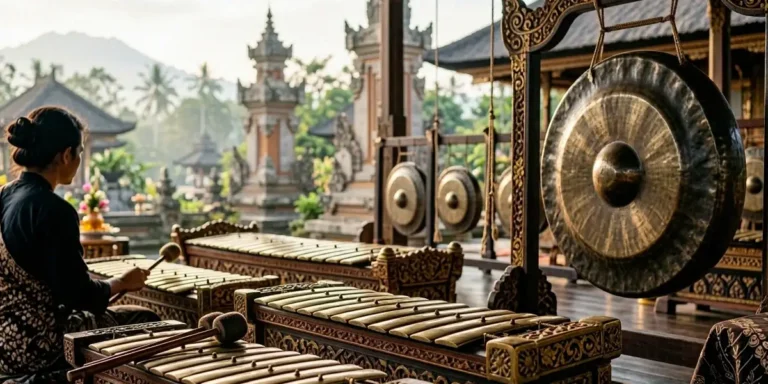
Gamelan is the traditional ensemble of metallophones, gongs, and drums that accompanies all Balinese dance. It’s the soundtrack to the performance, and it’s an art form in its own right. The gamelan is made up of many instruments, and the two main tunings are pelog and slendro. The gangsa is the most important instrument — it’s a metallophone that carries the melody, and the sound of the gangsa is the sound of Bali. Gamelan is also played in Australia, and there are ensembles in cities like Darwin and Melbourne.
Key Instruments You’ll Hear
- Gangsa: A metallophone that carries the melody, played with a hammer.
- Gong: A large, hanging gong that marks the cycles of the music.
- Kendang: A drum that leads the ensemble and sets the tempo.
- Reyong: A set of small gongs that plays the interlocking patterns.
- Flute (suling): A bamboo flute that adds a melodic layer.
Gamelan in Australia: Where to Listen
You don’t have to be in Bali to hear gamelan. Gamelan ensembles exist in Australian cities like Darwin and Melbourne, and they often perform at cultural festivals and community events. If you’re interested in the music, we recommend checking out local gamelan groups before you travel — it’s a great way to prepare your ears for what you’ll hear in Bali. The sound is distinctive, and once you’ve heard it, you’ll recognise it anywhere.
Other Styles Worth Knowing: Janger, Pendet, and More
Beyond the big names, there are many other Balinese dance styles worth knowing. Janger is a social dance, often performed by young men and women, and it’s more playful and interactive than the temple dances. Pendet is a welcome dance, often performed at the start of a ceremony, and it’s a beautiful, gentle dance. Sanghyang is a trance dance, and it’s performed for purification. These styles are often performed at festivals and ceremonies, and they’re worth seeking out if you want a deeper understanding of Balinese dance.
Janger: The Social Dance
Janger is a social dance, often performed by young men and women in a group. It’s more relaxed and playful than the temple dances, and it’s often performed at festivals and community events. The dancers sing and move together, and the atmosphere is joyful. It’s a great example of how Balinese dance can be both sacred and social, and it’s worth seeing if you get the chance.
Pendet: The Welcome Dance
Pendet is a welcome dance, often performed at the start of a ceremony. It’s a gentle, graceful dance, and it’s often performed by young girls. The dance is a way of welcoming guests and offering flowers, and it’s a beautiful introduction to Balinese dance. If you attend a ceremony, you may see Pendet performed as part of the welcome, and it’s a lovely way to start the experience.
Conclusion
Understanding Balinese dance is about more than just knowing the names of the styles. It’s about understanding the culture, the religion, and the people behind the performances. Many Australian travellers visit Bali annually, making cultural understanding key — and we think that’s a good thing. When you attend a performance with fresh eyes, respecting the culture and the ceremony, you’ll get so much more out of it. So book that ticket, bring a sarong, and let the gamelan carry you into the story.
FAQ
What is the best Balinese dance to see for a first-time visitor?
Legong is the most accessible and iconic, and it’s a great starting point. Ubud Palace is a top spot for Legong performances, and the setting is beautiful. If you want something more dramatic, the Barong dance is a good choice — it’s often performed in Batubulan village near Ubud.
Where can I see Kecak at sunset?
Uluwatu Temple hosts famous Kecak fire dances at sunset, and it’s one of the most spectacular settings in Bali. Tanah Lot is another popular venue. We recommend booking in advance during peak season.
Do I need to dress a certain way to attend a Balinese dance performance?
Yes, especially for temple performances. We recommend wearing a sarong and a sash, and dressing modestly. For tourist shows, the dress code is usually more relaxed, but it’s still respectful to dress appropriately.
Can I hear gamelan in Australia?
Yes. Gamelan ensembles exist in Australian cities like Darwin and Melbourne, and they often perform at cultural festivals and community events. It’s a great way to prepare your ears for what you’ll hear in Bali.
Is it okay to take photos during a performance?
It depends on the venue. For temple ceremonies, flash photography is usually not allowed, and you should always ask before taking photos. For tourist shows, photography is usually fine, but we recommend checking the rules at the venue.