The Frog Dance and Other Lesser-Known Balinese Dance Shows
The gamelan starts before we even see the dancers — a ripple of bronze keys, a drummer locking in a tempo that sounds almost like croaking. We’re in a village banjar in Buleleng, North Bali, a good two hours from the nearest beach club, and a dozen kids are crouched low, elbows out, bouncing across the open courtyard in a dance that mimics frogs chasing insects. No ticket booth, no programme, no rows of tripods. Just neighbours laughing, grandparents nodding, and a ritual that has been passed down for generations. This is the Frog Dance (Tari Kodok), and it is exactly the kind of performance most Australian travellers never see — because they never leave the Ubud–Uluwatu corridor. We think that’s a mistake worth correcting.
Why Go Beyond Legong and Kecak?
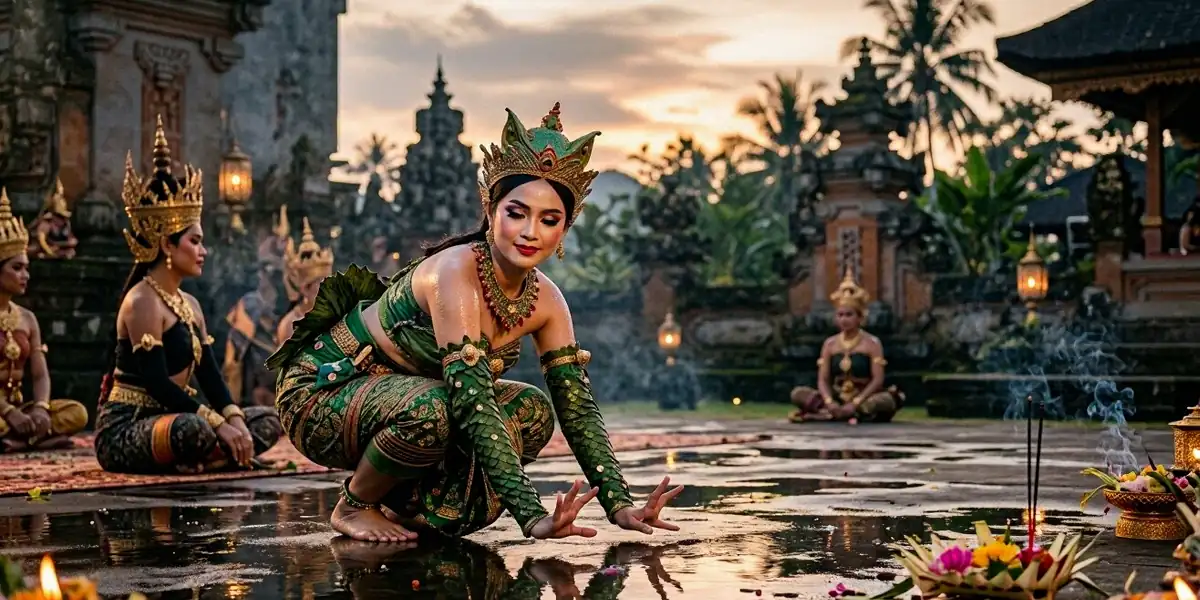
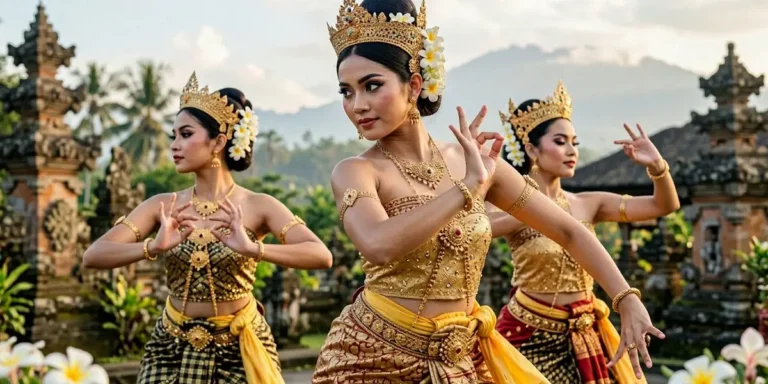
Legong and Kecak are magnificent — nobody is arguing otherwise. But they are also the two dances engineered for visitors: nightly shows in Ubud, sunset performances in Uluwatu, coach loads of tourists filing in and out. If your only exposure to Balinese dance is a 90-minute commercial bill, you’ve seen the highlight reel, not the culture. The dances that live inside village life — performed for temple anniversaries, harvests, and coming-of-age ceremonies — carry meaning that a stage show simply can’t replicate.
The Tourist Trap of Famous Dances
Here’s the pattern we see constantly: Australians land in Denpasar, transfer to a villa in Seminyak or Canggu, do a day trip to Ubud for the Legong, an evening at Uluwatu for the Kecak, and fly home thinking they’ve “done” Balinese dance. Those shows are genuinely good, and we still recommend them for first-timers. But they are staged, priced, and timed for convenience. The crowd is almost entirely foreign. The dancers are professionals performing a condensed version. You learn what the dance looks like — not what it means to the community performing it.
Authentic Experiences in Village Banjar
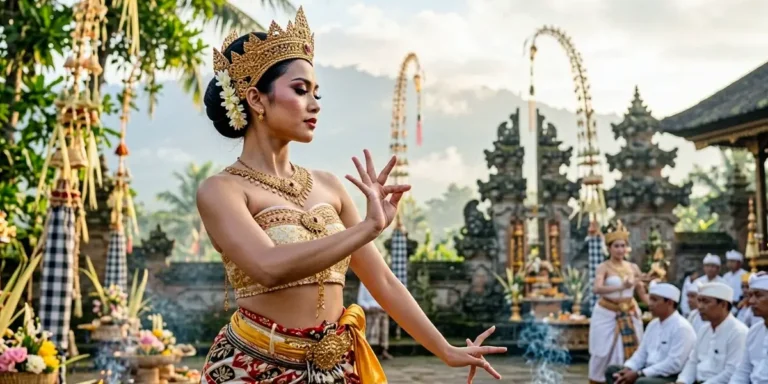
The alternative is the banjar — the neighbourhood association that organises everything from road maintenance to temple ceremonies. When a banjar stages a dance, it’s usually because the community itself needs it: an odalan (temple anniversary), a purification ritual, a youth group competition. You’ll stand shoulder-to-shoulder with locals, often as the only foreigner present. You might be handed a cup of kopi. You will almost certainly be photographed by someone’s uncle. And you’ll see dances that never appear on a commercial bill.
The Frog Dance (Tari Kodok): Bali’s Quirky Gem
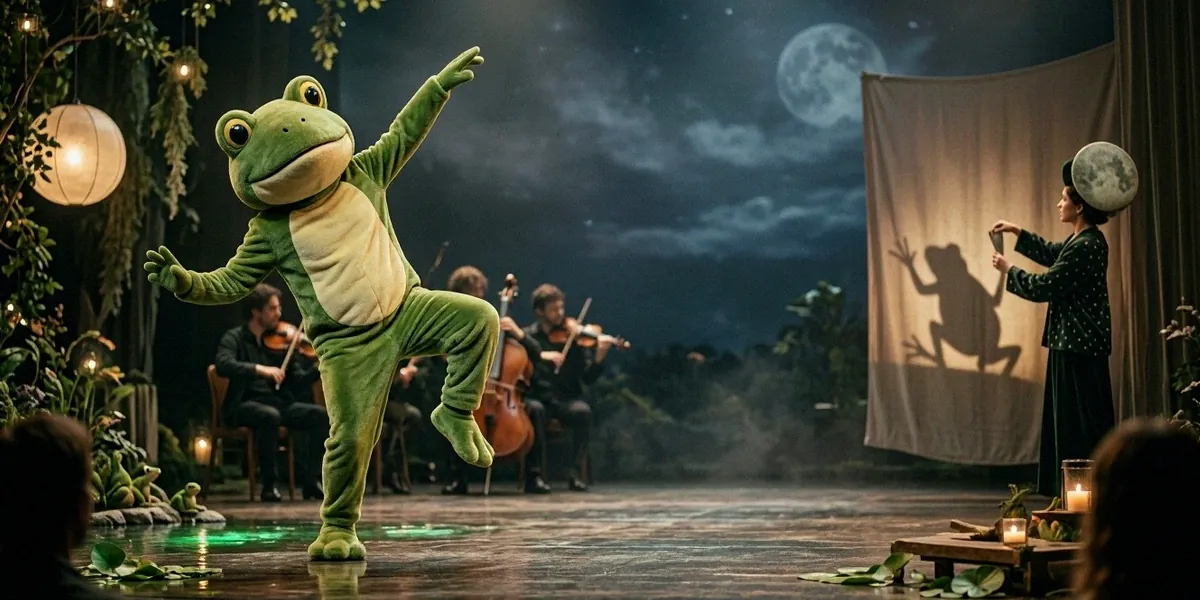
Tari Kodok is a comic dance from Buleleng, North Bali, in which performers — usually children — imitate the movements of frogs: hopping, squatting, snapping at insects, tumbling over one another. It’s genuinely funny, and that’s the point. Not every Balinese dance is solemn or sacred. Some exist to entertain, to teach younger children coordination and stagecraft, and to give a village festival a moment of levity.
The dancers wear green costumes and often frog-like headpieces, and the choreography leans into physical comedy. A gamelan ensemble accompanies the performance, typically a lighter, faster-paced arrangement that matches the bouncing rhythm of the dancers. Because it’s usually performed by kids, the standard is charmingly variable — a missed cue here, an over-enthusiastic leap there. That imperfection is part of the appeal.
Origins and Meaning
Tari Kodok emerged from the villages of Buleleng and is rooted in the agricultural life of North Bali, where rice paddies and irrigation channels make frogs a familiar, almost companionable presence. The dance isn’t ceremonial in the sacred sense — it doesn’t invoke spirits or mark a rite of passage. Instead, it celebrates village humour, teaches young performers stage discipline, and reinforces the bond between community and the natural environment that sustains it. In a sense, it’s a children’s dance with a serious underlying function: transmitting cultural identity to the next generation.
Where to See It
Tari Kodok is not a nightly attraction, so you’ll need to be in the right place at the right time. Your best bets:
- The Bali Arts Festival (Pesta Kesenian Bali) in Denpasar, held mid-year, which regularly showcases rare and regional dances from across the island, including North Bali’s repertoire.
- Village festivals and competitions in Buleleng, particularly around Singaraja and the surrounding regency, where local children’s groups perform.
- School and banjar events — ask your accommodation host if any youth dance competitions are scheduled during your stay.
If you’re based in the south, the Bali Arts Festival is the most realistic opportunity. It runs for roughly a month and features free or low-cost performances daily.
Other Lesser-Known Dances Worth Seeking Out
The Frog Dance is the headline act of this article, but it’s far from the only under-the-radar performance worth chasing. Four others consistently reward travellers who make the effort — and all four appear at temple ceremonies and community events rather than commercial venues.
Baris: The Warrior’s Call
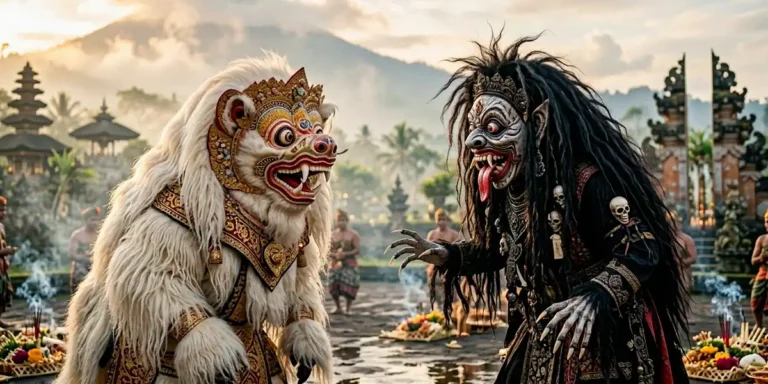
Tari Baris is a solo warrior dance, historically performed by men preparing for battle or accompanying religious processions. The dancer moves with sharp, deliberate gestures — spear or kris in hand — embodying courage and devotion. There are many regional variations, each with its own costume and gamelan accompaniment. You’ll most often encounter Baris at temple ceremonies, where it functions as both offering and protection.
Sanghyang: Sacred Trance
Tari Sanghyang is the one to treat with the most care. In this dance, performers enter a trance state — sometimes deliberately induced — and are believed to channel spirits or serve as a conduit for purification. In some versions, a dancer on horseback-like movements is carried through the village to ward off disease. Sanghyang is not entertainment. It is sacred, and it is performed only when the community requires it, typically during temple festivals (odalan) or in response to specific spiritual needs. If you’re fortunate enough to witness one, keep your distance, keep your phone down unless invited, and follow the lead of the locals around you.
Janger: Bali’s Youthful Energy
Tari Janger is a social dance performed by young men and women in alternating groups, trading sung verses back and forth in a call-and-response style. It’s lively, flirtatious, and endlessly charming — a courtship dance in spirit, though today it’s mostly a celebration of youth and community. Janger is traditionally accompanied by the angklung gamelan, a bamboo ensemble with a bright, percussive sound distinct from the bronze gong kebyar you’ll hear at tourist shows. Look for it at youth festivals and village celebrations.
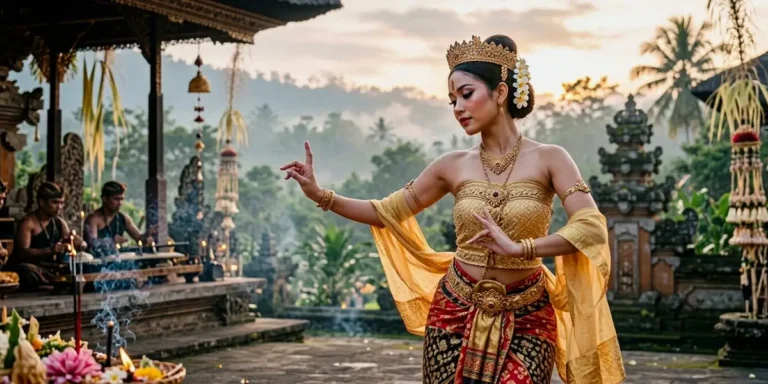
We’d also add Tari Pendet — the welcoming dance — to your list. Once performed by young women carrying offerings to welcome gods at temple ceremonies, it has since become a staple of formal events and even airport welcomes. It’s more common than the others, but seeing it in its original temple context is a different experience entirely.
The Gamelan Behind the Dances
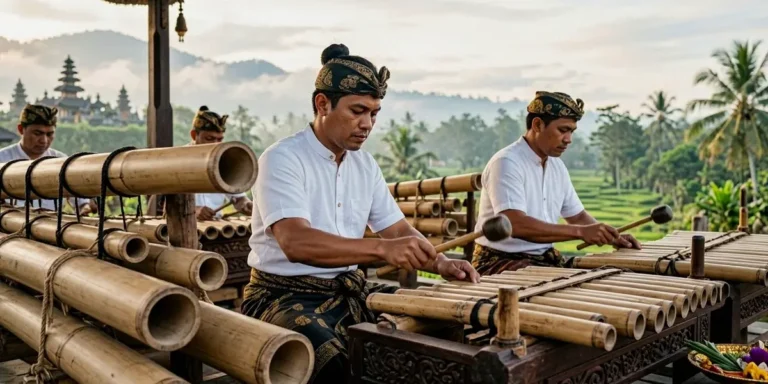
No Balinese dance exists without its gamelan. The two are inseparable — the dancers’ movements are locked to the ensemble’s tempo, and the ensemble adjusts in real time to the performance. For Australian music lovers, this is often the unexpected highlight: a wall of interlocking metallophones, gongs, drums, and flutes that sounds like nothing else on earth.
Gamelan Varieties and Their Dances
Different dances call for different ensembles. The gong kebyar — the most famous, all bronze and explosive dynamics — dominates modern Legong and contemporary repertoire. The selonding gamelan, an older and more austere ensemble, accompanies sacred dances and temple rituals, particularly in Bali Aga villages. The angklung gamelan, made of bamboo, provides the soundtrack for Janger. And the gamelan gambuh, with its long bamboo flutes, supports the oldest surviving dance-drama form on the island.
This matters because the gamelan isn’t background music — it’s a structural partner. When you watch a lesser-known dance, you’re hearing an ensemble that may only exist in that one village, played by musicians who learned it from their fathers.
Learning Gamelan as a Traveller
If the sound grabs you — and it usually does — you can actually learn to play. Gamelan workshops are available in Ubud, ranging from single-session introductions to multi-day courses, and several are run by Balinese musicians who teach both the technique and the cultural context. No prior musical training is required. You’ll sit cross-legged, learn a simple interlocking pattern, and discover just how difficult it is to keep time with twenty other players. It’s one of the most rewarding hours you can spend in Bali, and it permanently changes how you hear the music at every performance afterwards.
How Australian Travellers Can Find These Shows
Finding village performances takes a bit more effort than booking a ticket online, but it’s entirely doable. Here’s how we’d approach it.
- Check banjar schedules. Local neighbourhood associations post upcoming ceremonies and performances on noticeboards and in community WhatsApp groups. Ask at your homestay or guesthouse — hosts are usually delighted to point you toward something happening nearby.
- Visit during temple festivals (odalan). Every temple celebrates its anniversary on the Balinese Pawukon calendar, roughly every 210 days. Odalan are the single best opportunity to see sacred dances like Sanghyang and Baris in their proper context.
- Ask your homestay host directly. A simple “are there any ceremonies or dances happening while I’m here?” often unlocks invitations you’d never find through a booking platform.
- Follow the Bali Arts Festival. The Pesta Kesenian Bali in Denpasar is the island’s biggest cultural showcase and features rare regional dances that rarely appear elsewhere. Check the schedule in advance and plan at least one full day.
- Get there easily. Jetstar and Virgin Australia operate direct flights from Australia to Bali, so getting to Denpasar is straightforward — the real decision is whether you stay in the south or venture north to Buleleng and the villages where dances like Tari Kodok originate.
Timing Your Visit Around Festivals
The Balinese calendar is busy, and there’s almost always something happening somewhere. Odalan occur throughout the year, and the Bali Arts Festival typically runs from mid-June to mid-July. If you can, build a little flexibility into your itinerary — a ceremony that wasn’t scheduled when you booked may appear once you arrive. We recommend asking your host at check-in rather than planning months ahead.
Etiquette and Respect
These are community events, not attractions. A few ground rules:
- Wear a sarong and sash at temple ceremonies — most temples lend them at the entrance.
- Never walk in front of someone who is praying, and don’t step over offerings on the ground.
- Ask before photographing, particularly during sacred dances like Sanghyang. A nod from a local is usually enough.
- Stay for the whole performance if you can — leaving midway can be read as disrespectful.
- Don’t treat trance dancers as spectacle. Keep a respectful distance and follow the crowd’s behaviour.
Get these basics right, and you’ll be welcomed rather than tolerated — which is the whole point of going beyond the tourist circuit in the first place.
FAQ
What is the Frog Dance in Bali?
Tari Kodok, or the Frog Dance, is a humorous Balinese dance from Buleleng in North Bali, in which performers — usually children — imitate frogs hopping and catching insects. It’s accompanied by gamelan and performed at village festivals and events rather than commercial tourist venues.
Where can Australians see the Frog Dance?
The most accessible option is the Bali Arts Festival (Pesta Kesenian Bali) in Denpasar, which showcases rare regional dances. Otherwise, look for village festivals and youth competitions in the Buleleng regency, particularly around Singaraja.
What’s the difference between tourist dance shows and village performances?
Commercial shows in Ubud and Uluwatu are staged for visitors, with set times and tickets. Village performances happen for community reasons — temple anniversaries, festivals, ceremonies — and feature dances like Sanghyang, Baris, and Janger that rarely appear on commercial bills.
Can travellers learn to play gamelan in Bali?
Yes. Gamelan workshops are available in Ubud, ranging from single introductory sessions to longer courses. No musical experience is needed, and it’s one of the best ways to deepen your understanding of Balinese dance and music.
Do I need to fly via Jakarta to reach Bali from Australia?
No. Jetstar and Virgin Australia operate direct flights from Australian cities to Bali, making Denpasar an easy entry point before heading north or east to find village performances.
Chasing down the Frog Dance, a Sanghyang trance ritual, or a youth Janger competition takes a little more planning than booking a seat at a nightly tourist show. But that extra effort is precisely what makes it worthwhile. You’ll come home with stories about a village courtyard in Buleleng, a gamelan pattern you somehow managed to play, and a ceremony you stumbled into by asking the right question at the right time. For Australian travellers willing to look past the Legong and Kecak circuit, Bali’s lesser-known dances offer something the commercial stage never can: a genuine connection to the island’s living culture.