Jegog: Bali’s Bamboo Gamelan
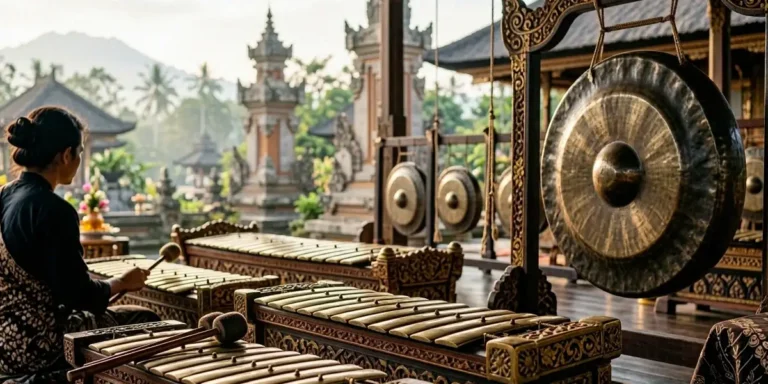
Stand in front of a Jegog ensemble and you feel the music before you fully hear it. The bass notes roll up through the floor, hit you somewhere in the sternum, and hang in the air like thunder rolling across a rice field. If your only experience of Balinese gamelan is the shimmering bronze metallophones of Ubud’s palace performances, Jegog will surprise you. This is gamelan built entirely from giant bamboo, and it sounds like nothing else on the island.
What Is Jegog? Bali’s Bamboo Orchestra Explained
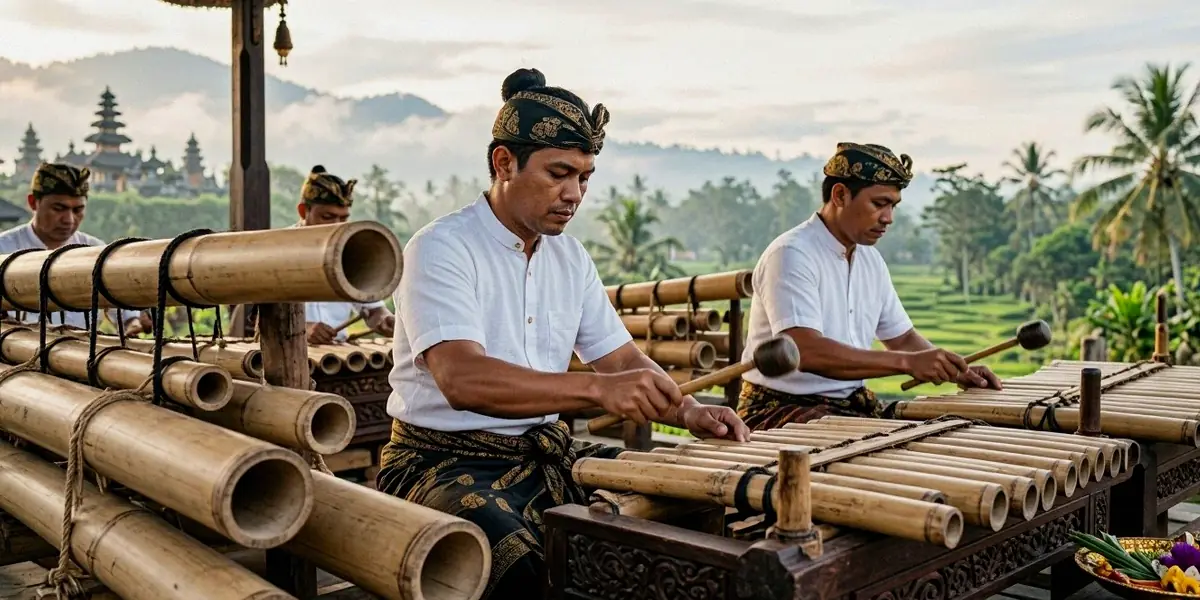
Jegog is a distinct form of gamelan made completely from bamboo, and it originates from Jembrana regency in West Bali. Where the more familiar gamelan gong kebyar ensembles use bronze keys and gongs, Jegog uses enormous bamboo tubes — some reaching up to 2 metres in length — that produce a deep, resonant pitch you can feel in your chest. The name “jegog” refers both to the ensemble and to the largest instruments within it.
The Giant Bamboo That Makes the Sound
The instruments are crafted from giant bamboo, specifically the species Dendrocalamus asper, which grows in thick stands across West Bali. Mature culms are harvested, cured, and cut into graduated lengths. The longest tubes, up to 2 metres, are suspended in wooden frames and struck with padded mallets. The physics is simple but the effect is dramatic: long, thick bamboo produces a low fundamental tone with a warm, woody decay that bronze simply cannot replicate. Because bamboo is abundant and relatively inexpensive, Jegog has always been a village music — accessible, homegrown, and deeply tied to the land it comes from.
How Jegog Differs from Bronze Gamelan
The contrast with bronze gamelan is immediate and obvious once you hear both:
- Material: Bronze gamelan uses cast metal keys and gongs; Jegog uses bamboo tubes only.
- Pitch: Jegog sits far lower, with a rumbling bass register that bronze ensembles rarely reach.
- Timbre: Bronze rings and sustains; bamboo thumps, pops, and decays quickly.
- Setting: Bronze gamelan dominates temple and palace repertoire across Bali; Jegog is concentrated in Jembrana and the west.
- Volume: A full Jegog ensemble is loud in a physical, percussive way — there’s no amplification required.
The Origins and Cultural Roots of Jegog
Jegog’s history is rooted in Jembrana regency, the westernmost regency on Bali’s south coast, an area better known for its rice fields and fishing villages than for tourism. The music grew out of agricultural life, and its rhythms were once tied to rice-field rituals and local festivals. It was popularised in the 20th century by local artists who refined the ensemble format and brought it to wider audiences, and it remains a genuine point of pride for West Balinese communities today.
Jembrana: The Home of Jegog
Ask any Balinese musician where Jegog comes from and the answer is immediate: Jembrana. Villages such as Sangkaragung and Kaliakah have produced generations of Jegog players, and the regency’s cultural identity is inseparable from the instrument. Unlike the tourist-facing arts of Ubud, Jegog in Jembrana is still largely performed by and for the local community.
From Ritual to Performance
Jegog began as functional music — accompanying harvest celebrations, temple ceremonies, and village gatherings. Over time it developed a concert repertoire, including the interlocking fast passages and sudden dynamic shifts that make it so exciting live. Today you’ll hear it at both religious ceremonies and staged cultural events, and the two contexts still feed each other.
Where to Hear Jegog in Bali
For Australian travellers, the good news is that you don’t need to trek all the way to West Bali to hear Jegog — though the most authentic experience is definitely out there.
Jembrana and West Bali
The annual Jegog Festival in Jembrana is the single best opportunity to see multiple ensembles perform, and it attracts both local and international visitors. Village ceremonies in the regency also regularly feature Jegog. If you’re based in Canggu or Seminyak, Jembrana is a manageable day trip.
Ubud and Central Bali
Cultural venues in Ubud regularly programme gamelan performances, and while bronze ensembles dominate, Jegog groups do appear — particularly during festival periods and at larger cultural nights. Taman Budaya in Denpasar is another reliable venue, hosting Jegog as part of its wider arts programming. Some hotels in Seminyak and Canggu also host Jegog groups for guests, which is a convenient option if your schedule is tight.
Festivals and Special Events
Beyond the Jegog Festival itself, keep an eye on Bali’s arts calendar — the Bali Arts Festival (Pesta Kesenian Bali) in Denpasar frequently includes Jegog performances, and temple odalan ceremonies in the west sometimes feature the ensemble. Ask your hotel concierge or a local guide; word of mouth is often the best way to find a performance.
The Instruments and Musicians of Jegog
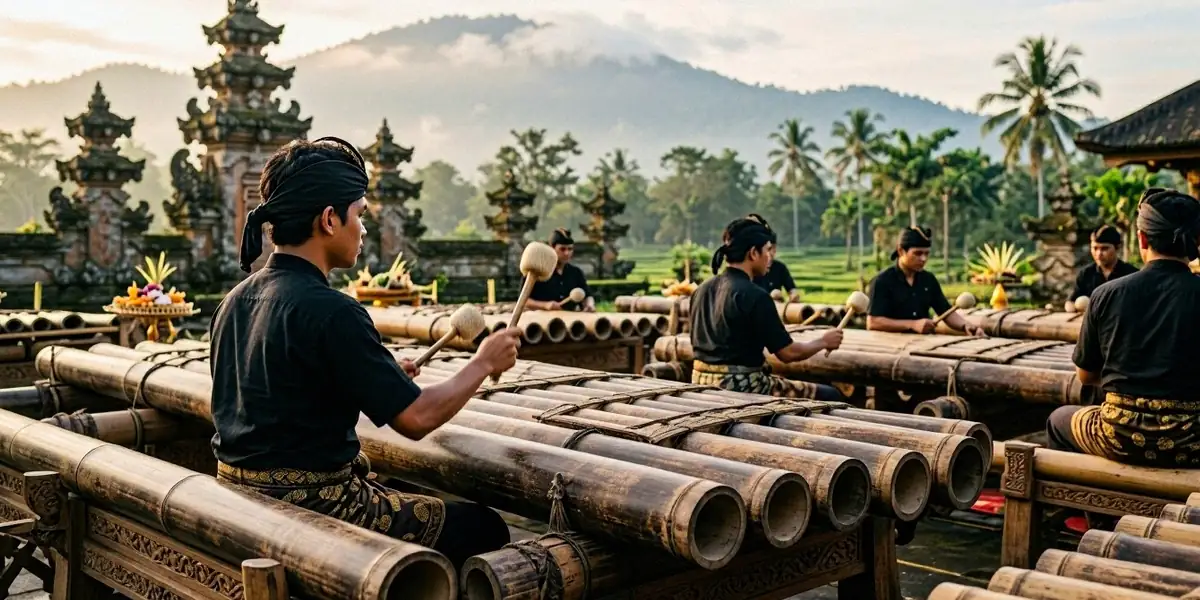
A full Jegog ensemble typically involves 15 to 20 players, all working together with the kind of tight coordination that only comes from regular rehearsal.
The Giant Bamboo Tubes
The largest instruments — the ones that give the ensemble its name — are the giant bamboo tubes themselves, suspended horizontally and struck with mallets. They carry the bass line and provide the music’s unmistakable low-end power.
Supporting Instruments and Rhythms
Around the big tubes sit smaller bamboo xylophones that carry melodic lines, plus various percussion instruments that lock in the rhythm. One instrument worth listening for is the kotek, a set of bamboo clappers that produces a sharp, clicking sound and helps mark the tempo. Many Jegog musicians are farmers who play part-time, which gives the music a lived-in, unpolished energy that’s hard to fake.
Jegog for Australian Travellers: Tips and Etiquette
Here’s what we tell friends heading to Bali who want to experience Jegog properly.
When to Go and What to Expect
The dry season, roughly May to September, is the most comfortable time to visit and coincides with many cultural events. Some performances are free, particularly at village ceremonies, while staged shows may charge around IDR 100,000. Because Jegog is far less touristy than Kecak, it feels more authentic — you’re more likely to be sitting among locals than a coach tour group.
Getting There from South Bali
Reaching Jembrana from Kuta takes about 2 to 3 hours by car, depending on traffic. We recommend hiring a private driver for the day rather than relying on ride-hailing apps, which can be unreliable that far west. If you’re staying in Ubud, allow extra time.
Audience Etiquette
A few simple rules go a long way:
- Dress modestly, especially at temple performances — a sarong and sash are usually required.
- Don’t walk in front of performers or between the instruments and the audience during a piece.
- Photography is often welcome, but avoid flash and never climb on the stage.
- Stay for the full performance where possible; leaving mid-piece is considered rude.
- If you’re unsure whether something is appropriate, ask — Balinese hosts are famously gracious about it.
Experiencing Jegog is a chance to connect with a lesser-known side of Balinese culture — one that exists far from the beach clubs and the Instagram crowds. The next time you’re in Bali, we’d encourage you to seek out a performance, whether in Jembrana, Denpasar, or Ubud. It’s the kind of travel memory that stays with you long after the tan fades.
FAQ
What is Jegog and how is it different from other Balinese gamelan?
Jegog is a form of gamelan made entirely from giant bamboo rather than bronze. It originates from Jembrana regency in West Bali and produces a much deeper, more percussive sound than the bronze ensembles most visitors hear in Ubud.
Where can I see a Jegog performance in Bali?
The most authentic option is Jembrana in West Bali, particularly during the annual Jegog Festival. You can also find performances at Taman Budaya in Denpasar, cultural venues in Ubud, and some hotels in Seminyak and Canggu.
How much do Jegog performances cost?
Some performances, especially at village ceremonies, are free. Staged cultural shows typically charge around IDR 100,000 per person.
How do I get to Jembrana from South Bali?
Jembrana is about a 2 to 3 hour drive from Kuta by car. We suggest hiring a private driver for the day, as ride-hailing services can be unreliable in that part of the island.
When is the best time to visit Bali for Jegog performances?
The dry season, from May to September, is the most comfortable time to travel and coincides with many cultural festivals and events where Jegog is performed.