Legong: History and Meaning
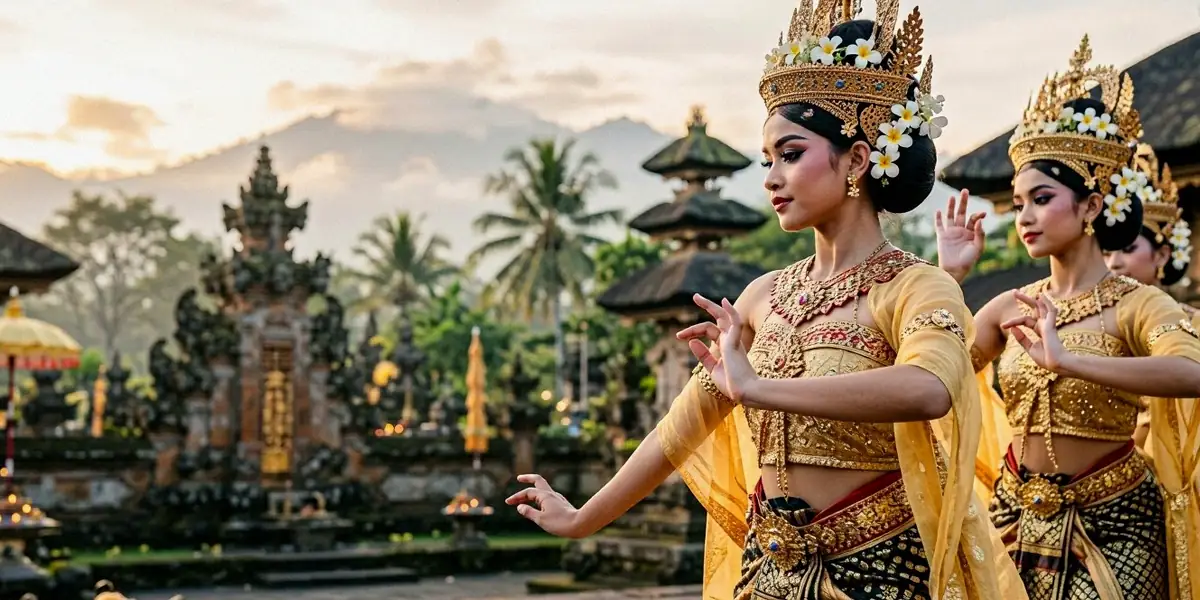
The gamelan strikes its first note and the temple courtyard falls silent. Under strings of dim bulbs, two young dancers step forward in gold-leafed costumes, their eyes casting sharp, deliberate glances across the crowd. Every finger trembles, every hip shifts in time with the drums. For Australian travellers who have flown in on a Jetstar or Virgin Australia flight to Denpasar earlier that day, this is often the moment Bali stops being a beach holiday and becomes something far older. Legong has held audiences like this for nearly two centuries, and once you understand where it comes from, the performance never looks the same again.
What Is Legong? A Classical Balinese Dance
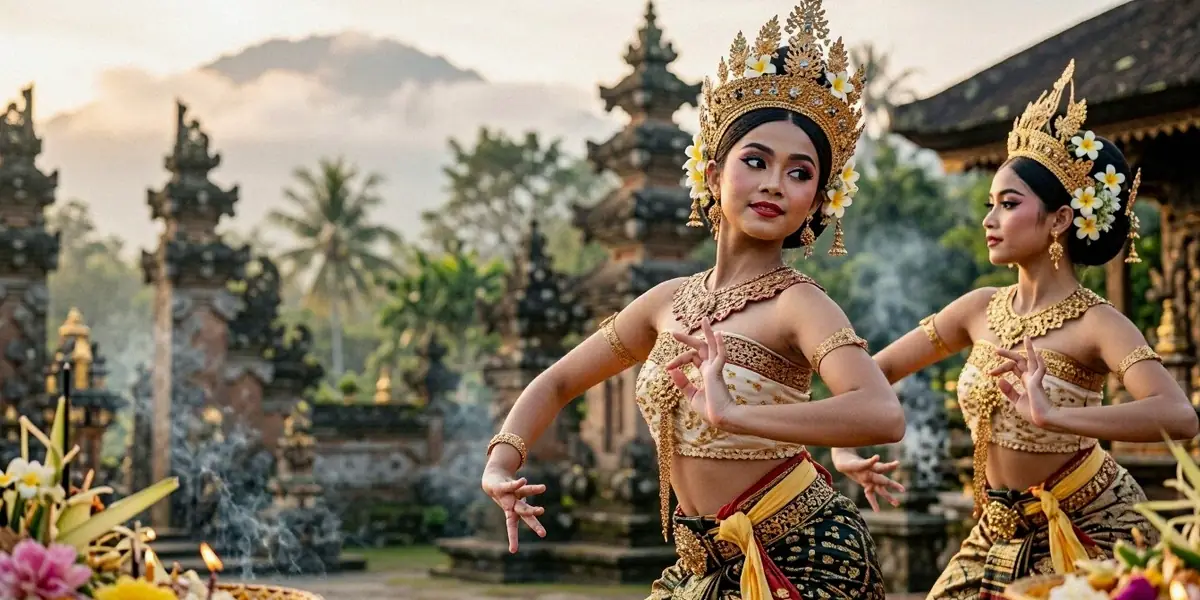
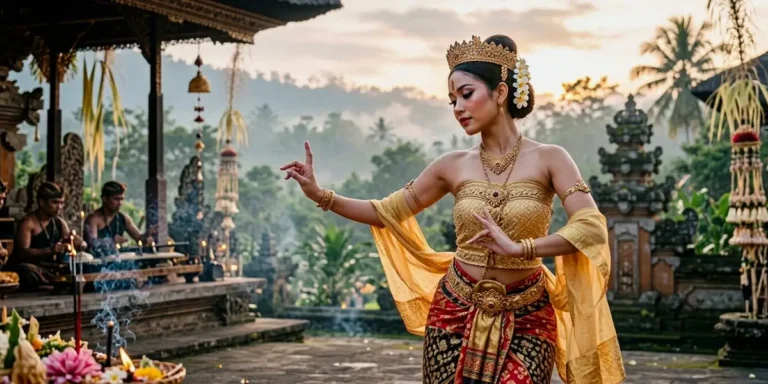
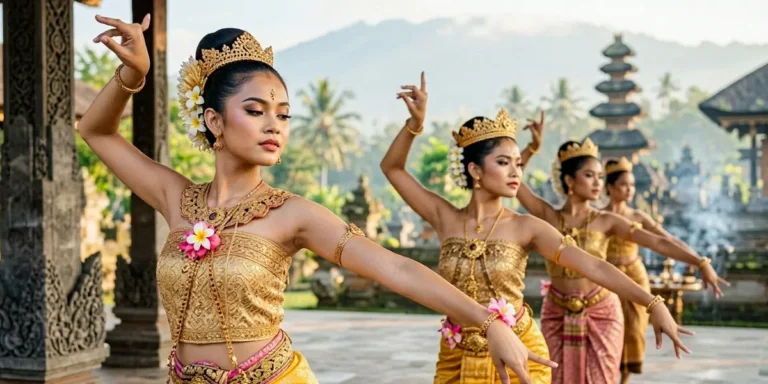
Legong is a refined classical dance performed by young girls, historically trained from a very early age within Bali’s royal courts and village banjar communities. It is defined by its precision: intricate finger articulations, tiny shuffling footwork, controlled neck movements, and above all the expressive eyes, which dart and hold in a technique known as seledet. A single wrong angle of the wrist is noticeable to an experienced Balinese audience.
The dance is inseparable from gamelan, the bronze percussion orchestra that drives its tempo and mood. You will encounter Legong at temple ceremonies, at community halls during odalan festivals, and at nightly tourist performances in Ubud and South Bali. The version most visitors see is a condensed, secular staging, but the movement vocabulary is essentially unchanged from the court tradition.
The Role of the Gamelan Orchestra
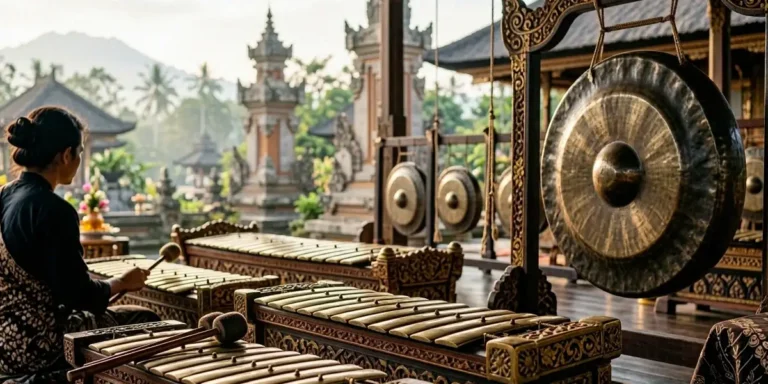
Legong is choreographed to a specific gamelan ensemble, usually the gong kebyar style with its sudden stops and explosive dynamics. The drums (kendang) lead, the gangsa metallophones interlock in fast kotekan patterns, and the gongs mark the structural cycles. Dancers do not simply follow the music; they physically embody it, with accents in the choreography landing on the same beat as the gong.
Costumes and Makeup: Visual Splendour
The costume is part of the meaning. Dancers wear a wrapped kain and sash, a gilded gelungan headdress, and layers of gold-painted leather ornamentation across the chest. The makeup is equally codified: a white base, arched eyebrows, and a red line at the corner of the eyes to make each glance carry further under temple lighting. In the past, costumes were commissioned by royal households; today they are often inherited or borrowed between villages.
Origins and History of Legong
Legong emerged in the 19th-century royal courts of Bali, most strongly associated with Gianyar and the village of Peliatan. Its movement language draws on the older Sanghyang dedari trance dances, in which young girls were believed to be entered by celestial spirits and danced involuntarily. Court choreographers took those sacred gestures and shaped them into a structured, repeatable performance.
From Gianyar, Legong spread outward to other kingdoms and villages. Each region developed its own variation, and by the early 20th century it had become the signature classical dance of Bali.
Royal Patronage and Village Traditions
Balinese kings funded dance troupes as a mark of prestige, and palace choreographers had the authority to refine and standardise repertoire. When the kingdoms lost formal political power under Dutch colonial rule, the tradition survived because it had already been absorbed into village life. The sekaa, or village dance club, became the new institution keeping Legong alive, and it still is today.
Evolution from Sacred to Performance Art
The biggest shift came in the 1930s, when Balinese performers began staging shortened versions for foreign visitors, particularly in Peliatan and Ubud. Tourists wanted a one-hour show rather than a three-hour ritual. This commercial adaptation was controversial at the time, but it funded training and costumes for a generation of dancers. Legong is now both a temple offering and a performance art, and the two forms borrow from each other constantly.
The Meaning Behind the Movements
Legong is not abstract. It tells stories drawn from Balinese and Javanese mythology, most famously the tale of King Lasem, who abducts a princess and is ultimately killed in battle. The narrative is carried by gesture rather than speech, and every hand position, eye movement, and step has a codified meaning that trained audiences read fluently.
Beyond plot, the dance carries values: grace under pressure, devotion to duty, and the moral consequences of desire and conflict. The ending is rarely triumphant in a simple sense; Balinese dance often leaves the audience with an unresolved feeling, which is part of its power.
Storytelling Through Dance
In the Lasem story, the dancers shift between characters without changing costume. A tilt of the head signals a change in speaker. A sharp glance to the side indicates suspicion or intent. The hand gestures, though not identical to Indian classical dance, function similarly as a vocabulary. If you watch a full Legong performance after reading the synopsis, you will start to spot the transitions within the first few minutes.
Symbolism of the Legong Dancers
The dancers themselves are symbolic. Historically, they were prepubescent girls, chosen for physical flexibility and believed to embody an idealised feminine grace. Their youth is not incidental: it represents purity and the fleeting nature of beauty, a theme that runs through much Balinese art. The two principal dancers are often paired with a third, the condong, whose opening solo sets the scene.
Where to See Legong in Bali
For Australian travellers based in Kuta, Seminyak, Sanur, or Canggu, Legong is easy to reach. Most performances run in the evening and last around an hour, making them suitable for families with children old enough to sit through a show.
- Ubud Palace – nightly performances in the heart of Ubud, walking distance from most central accommodation.
- Uluwatu Temple – the famous cliffside Kecak and fire dance at sunset, often paired with Legong excerpts.
- Garuda Wisnu Kencana Cultural Park – large-scale cultural performances in a purpose-built amphitheatre in South Bali.
- Village temples during odalan – free, authentic, and worth asking your hotel staff about.
Ubud: The Cultural Heart
Ubud remains the most reliable place to see Legong. The Ubud Palace courtyard hosts a different troupe most nights, and nearby villages such as Peliatan and Batuan stage performances that are closer to the traditional repertoire. Arrive early; seating is on the ground or on plastic chairs, and the front rows fill fast.
South Bali and Temple Performances
If you are staying in Kuta or Nusa Dua, Uluwatu Temple is the standout option, though the show there leans heavily on Kecak rather than pure Legong. Garuda Wisnu Kencana Cultural Park offers a more produced experience with larger audiences and easier parking. For something less staged, ask about temple ceremonies during your stay; Legong performed as an offering rather than a ticket event is a different experience entirely.
Legong Today: Preservation and Australian Connections
Legong is protected by a network of dance schools, government arts academies such as ISI Denpasar, and village sekaa that continue to train children from a young age. Festivals including the Bali Arts Festival give troupes from across the island a stage, and international tourism indirectly funds much of this activity.
Australian interest has grown steadily. Several Australian universities with Balinese dance programs run fieldwork and exchange projects with Balinese performers. Australian students regularly travel to Ubud for intensive study, and Balinese teachers visit Australia for workshops and university residencies.
Learning Legong: Opportunities for Visitors
You do not need to be a trained dancer to try a class. Short introductory workshops in Ubud and Sanur teach basic hand positions, eye movements, and a simple gamelan rhythm. A one-off two-hour class is enough to appreciate how difficult the full repertoire is.
How Australians Can Support Balinese Dance
The most direct support is attending performances and paying the ticket price rather than watching from outside. Beyond that, buying from local costume makers, donating to village sekaa, and treating performances as cultural events rather than photo opportunities all help. If you study gamelan or dance back in Australia, mentioning your Balinese teachers and inviting them for workshops keeps the exchange alive.
Understanding Legong’s history and meaning changes what you see on stage. For Australian travellers, that knowledge turns a pleasant evening in Ubud into a genuine encounter with a living tradition, and it encourages the kind of respectful engagement that Balinese performers genuinely appreciate.
FAQ
How long is a typical Legong performance?
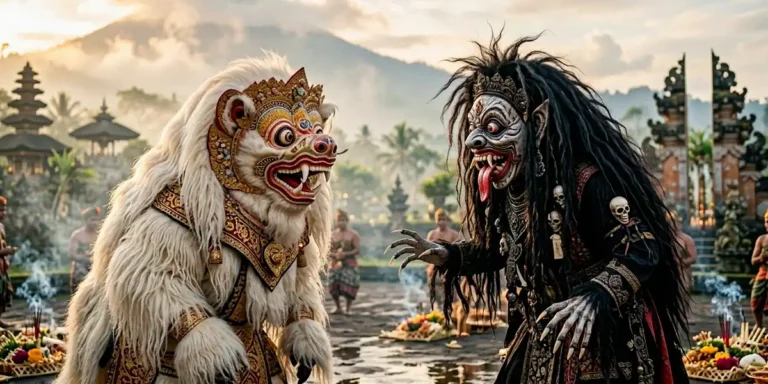
Most tourist-facing performances run between 45 and 75 minutes, often as part of a program that includes other dances such as Barong or Kecak. Temple performances during ceremonies can last much longer.
Is Legong suitable for children?
Yes, generally. The music is loud and the costumes are colourful, which tends to hold children’s attention. Evening shows at Ubud Palace and Garuda Wisnu Kencana Cultural Park are family-friendly, though younger children may find the 9pm finish tiring.
Do I need to book tickets in advance?
For Ubud Palace and Uluwatu Temple, it is wise to book through your hotel or a local agent during peak season, as shows sell out. Garuda Wisnu Kencana Cultural Park tickets can usually be purchased on arrival.
Can I take photos during a Legong performance?
Usually yes, without flash. Flash distracts the dancers and is considered disrespectful in temple settings. Always check signage and follow the MC’s instructions.
Which airlines fly from Australia to Bali for these performances?
Jetstar and Virgin Australia both operate direct flights to Denpasar from several Australian cities, alongside other carriers. From the airport, Ubud is roughly 90 minutes by car and Uluwatu around 45 minutes, depending on traffic.