Temple Etiquette for Visitors: How to Respect Balinese Dance and Gamelan
We still wince when we remember the bloke from Melbourne who turned up to a Legong performance at Ubud Palace in board shorts and a Bintang singlet. He wasn’t being disrespectful on purpose — he genuinely didn’t know that a temple courtyard isn’t the same as a beach bar in Seminyak. A kind local handed him a sarong and a sash before he even reached the gate, and he spent the rest of the evening quietly mortified. That moment is exactly why we wrote this guide. Understanding a few simple rules of temple etiquette doesn’t just keep you out of awkward situations — it unlocks a deeper, richer experience of Balinese dance and gamelan, and it shows the communities who perform for you that you actually care.
Why Temple Etiquette Matters for Dance Performances
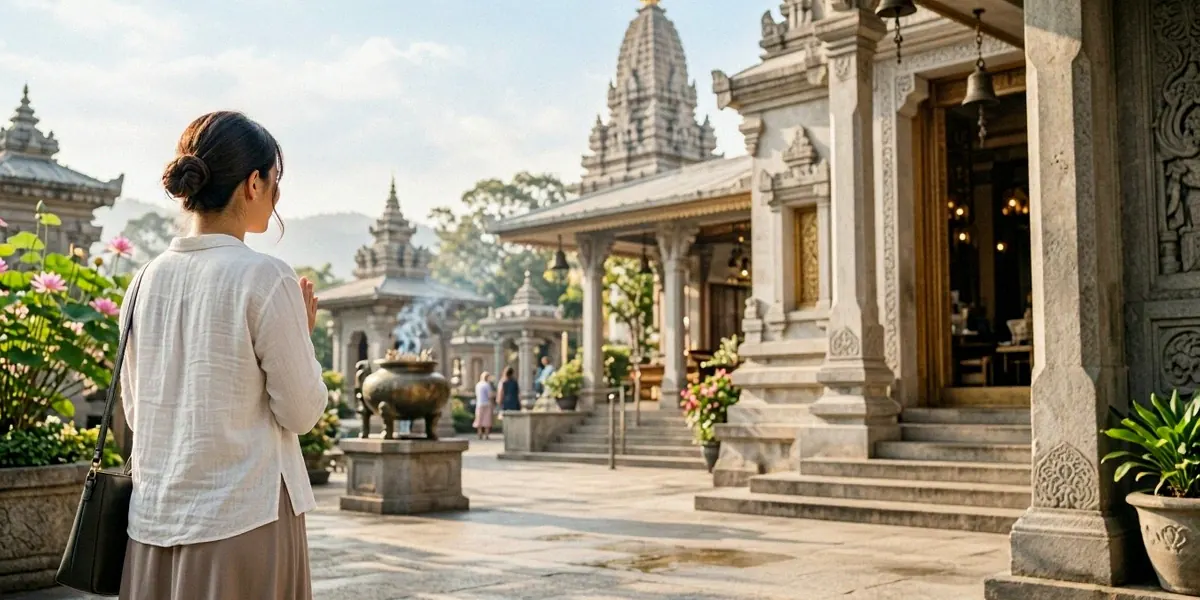
Balinese temples are not theatres. They are active places of worship where families pray daily, where ceremonies can run for hours, and where the community gathers for reasons that have nothing to do with tourism. When you watch a Legong or Kecak performance inside a temple compound, you are a guest in someone’s sacred space — not a ticket-holder at a commercial show. The dance and gamelan you’re witnessing are, in their original context, sacred offerings to the gods and ancestors. Treating the space with respect isn’t just polite; it’s the difference between watching a performance and understanding one.
The Sacred Role of Dance in Balinese Hinduism
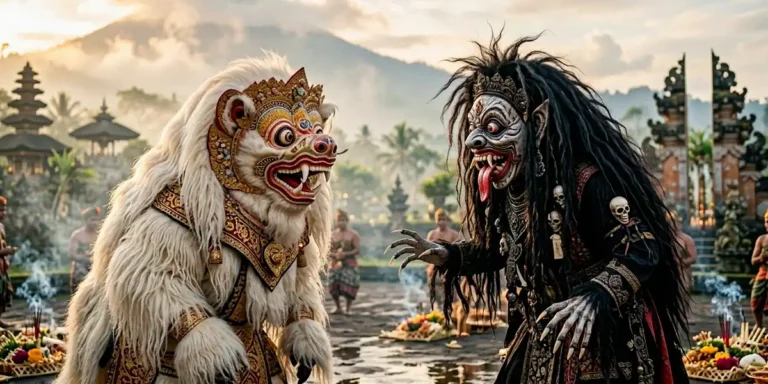
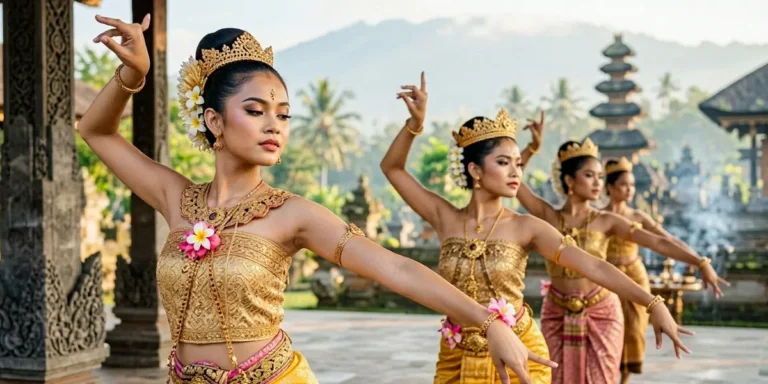
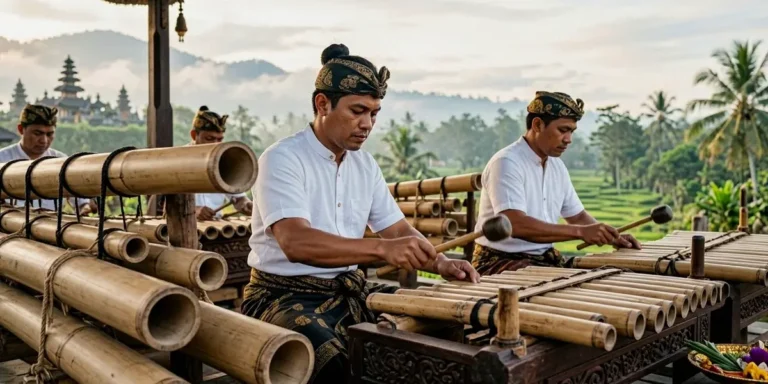
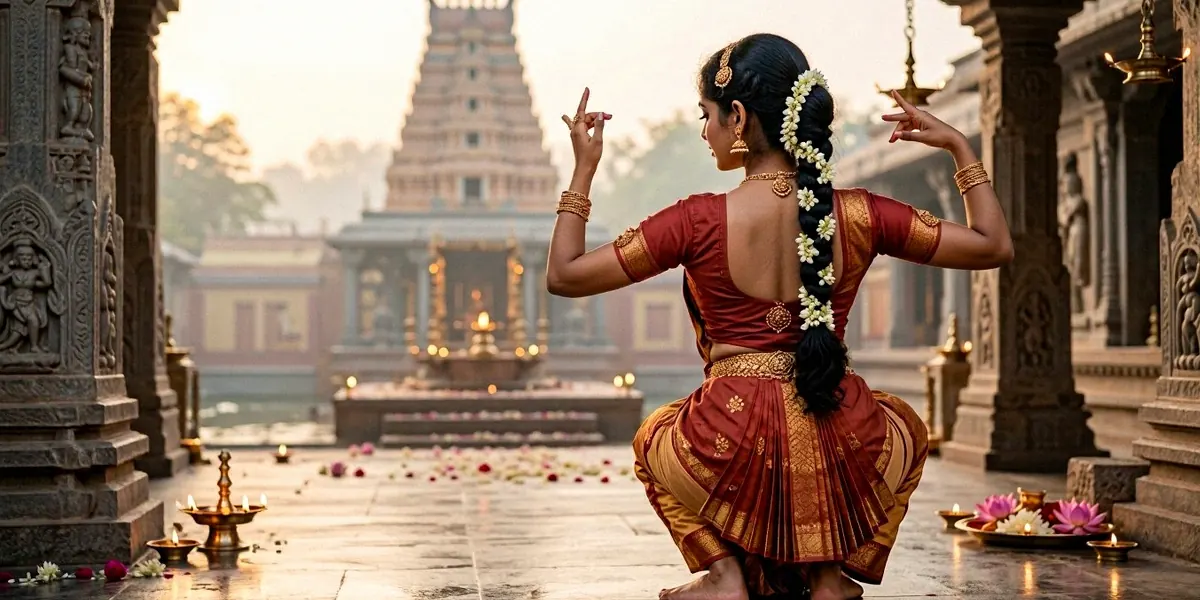
In Balinese Hinduism, dance is not entertainment in the Western sense. Legong, Barong, and the trance-like Kecak are performed as offerings — sesajen — to deities and spirits. The gamelan orchestra that accompanies them is tuned in specific scales and played with precise timing that has spiritual significance. Many dancers train from childhood and perform as a form of devotion. When you understand this, the etiquette rules suddenly make sense: you’re not at a concert, you’re at a ceremony.
How Etiquette Affects Your Access to Authentic Performances
Here’s the practical bit. Villages and temple committees decide who gets to perform for visitors. If tourists behave badly — climbing on shrines, shouting during gamelan interludes, wearing inappropriate clothing — those communities close their doors. Conversely, respectful visitors are often invited to ceremonies that aren’t advertised anywhere. We’ve been quietly waved into temple performances in Batubulan and Pengosekan simply because we dressed properly and kept our voices down. Good etiquette literally opens doors.
Dress Code: What to Wear (and Avoid) at Bali’s Temples
The Balinese dress code is straightforward once you know it, and it applies to everyone regardless of gender, age, or nationality. A sarong wrapped around the waist and a sash tied at the waist are the two essentials. Many temples rent sarongs for a small fee (usually IDR 10,000–20,000), but we recommend bringing your own from Australia — it’s cheaper, cleaner, and means you’re never caught short. Shoulders should be covered, and shoes come off before you enter inner courtyards.
Sarongs, Sashes, and Sleeves: The Basics
For men and women alike: sarong around the waist (over your clothes is fine), sash tied around the middle, and shoulders covered. A light scarf or a short-sleeved shirt works for shoulders. Women don’t need to cover their heads, though a hat should be removed in the inner temple. If you’re wearing a sarong over shorts, that’s acceptable — the sarong is what matters. Sashes are usually tied on the left side, but nobody will correct you if you get it slightly wrong.
Footwear and What to Do with Your Shoes
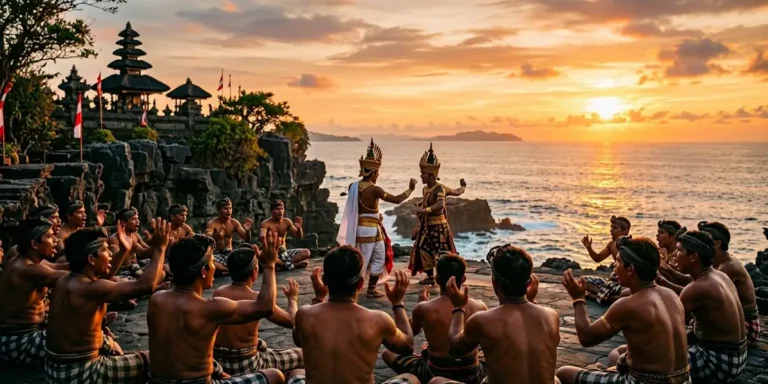
Remove your shoes before entering any inner courtyard or raised pavilion. Most temples have a shoe rack or a designated spot near the steps. Wear slip-on shoes or thongs (flip-flops) — you’ll be taking them on and off repeatedly, and laces get tedious fast. If you’re visiting Uluwatu Temple for the sunset Kecak, expect to walk on uneven stone paths, so bring something with a bit of grip but easy to remove.
What Not to Wear: Shorts, Singlets, and Swimwear
Leave the following in your hotel room:
- Shorts above the knee (unless covered by a sarong)
- Singlets, tank tops, and strapless tops
- Swimwear, board shorts, and beach cover-ups
- Hats inside inner temple areas
- Sunglasses worn during prayers or offerings
If you’re coming straight from the beach at Uluwatu or Tanah Lot, pack a sarong and a t-shirt in your day bag. It takes thirty seconds to change and saves you from being turned away at the gate.
Behaviour During Performances: Watching Legong, Kecak, and Barong
Once you’re inside and dressed appropriately, the next layer of etiquette is about how you sit, watch, and interact. This is where most well-meaning visitors slip up — not out of rudeness, but because nobody told them the rules. Ubud Palace and Uluwatu Temple are the two most popular venues for Legong and Kecak respectively, so we’ll use them as examples throughout.
Sitting Respectfully: Legs, Feet, and Head Level
Sit lower than any priest or officiant — if there’s a raised platform, don’t sit on it unless invited. Cross your legs or fold them to the side; never sit with your feet pointing at performers, shrines, or other people. Feet are considered the least sacred part of the body in Balinese Hinduism, so pointing them at someone is genuinely offensive. If you’re at Uluwatu for the Kecak, you’ll be seated in a semicircle on stone steps — keep your legs crossed or tucked, and don’t stretch them out toward the performers.
Photography and Video: When It’s Allowed and When It’s Not
Photography is generally permitted at tourist performances like the Ubud Palace Legong and the Uluwatu Kecak, but there are limits. No flash during ceremonies or prayers. No standing up mid-performance to get a better angle. No drones — ever, anywhere near a temple. If you’re unsure, watch what locals are doing. During actual religious ceremonies (as opposed to ticketed performances), put the camera away unless you’ve been explicitly invited to film.
Interacting with Performers and Gamelan Musicians
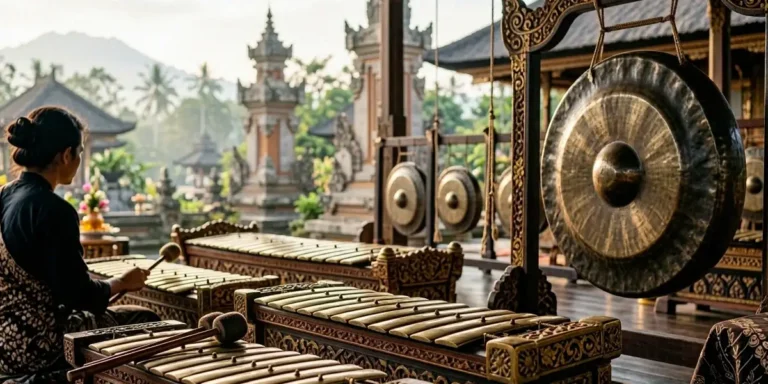
Never touch the gamelan instruments. They are consecrated objects, and even brushing against a metallophone can be a serious breach of etiquette. If you want a photo with a dancer or musician, ask first, and wait until after the performance — not during. A small tip (IDR 20,000–50,000) is appreciated if you’ve taken a photo with someone. Don’t interrupt a musician mid-song to ask questions; wait for a break in the gamelan.
Offerings, Donations, and Menstruation Taboos
This section covers the rules that trip up the most visitors, usually because nobody explains them until it’s too late. Read this before you go.
Understanding Canang Sari and Temple Offerings
Canang sari are small woven palm-leaf trays containing flowers, rice, and sometimes incense, placed on temples, shrines, pavements, and shop entrances throughout Bali. They are daily offerings to the gods and spirits. Do not step on them. Do not move them. If one is in your path, walk around it. If you see one on the ground, leave it alone — it’s not litter, it’s a prayer.
Donation Etiquette: How Much and Where
Donations are appreciated but never mandatory at temples. Most temples have a donation box near the entrance, and IDR 10,000–50,000 per person is a reasonable amount for tourists. For ticketed performances like the Ubud Palace Legong (usually IDR 100,000) or the Uluwatu Kecak (around IDR 100,000–150,000), the ticket price is your contribution. Don’t feel pressured into paying more than you’re comfortable with — but do pay something if you’ve enjoyed the experience.
Menstruation and Temple Entry: What Australian Women Need to Know
Menstruating women are traditionally not permitted to enter Balinese temple grounds. This is a common Balinese Hindu rule, not a judgment, and it applies to local women as well as visitors. Some temples enforce it more strictly than others, and some (like Tanah Lot) have specific signage. If you’re menstruating, respect the rule — watch from outside the temple walls, or visit a non-temple performance venue instead. It’s a small accommodation that means a great deal to the community.
Practical Tips for Australian Travellers
We’ve put together the practical stuff that makes the difference between a stressful visit and a memorable one. Australians often visit during the June–August peak season, so planning ahead matters more than you’d think.
Booking Performances and Choosing Ethical Operators
Book through reputable local guides or directly with the venue. Avoid touts who promise “authentic” performances in private compounds — they’re often exploitative. The Ubud Palace Legong runs most evenings at 7:30pm, and the Uluwatu Kecak runs at sunset. During peak season (June–August), book at least a few days in advance, especially for Uluwatu, which sells out regularly.
Timing Your Visit Around Ceremonies and Nyepi
Nyepi, the Balinese Day of Silence, falls in March and closes all temples and activities for 24 hours. No performances, no travel, no lights. If you’re in Bali during Nyepi, respect the silence — stay in your hotel and enjoy the rare experience of a completely quiet island. Other major ceremonies (like Galungan and Kuningan) can also affect performance schedules, so check locally before booking.
What to Bring: Sarong, Sash, and a Respectful Attitude
Our packing list for temple visits:
- A lightweight sarong (buy one in Australia or in Bali for around IDR 50,000)
- A sash or thin scarf for the waist
- A t-shirt or shirt that covers your shoulders
- Slip-on shoes or thongs
- A small day bag for your shoes and camera
- Patience and a willingness to sit quietly
Arrive early for good seats, especially at Uluwatu, where the best viewing spots fill up an hour before sunset. And remember — the attitude you bring matters more than anything you pack.
FAQ
Can I wear shorts to a Balinese dance performance?
Not on their own. You can wear shorts if you cover them with a sarong, which is the standard requirement for temple entry. For performances at Ubud Palace or Uluwatu Temple, always bring a sarong and sash.
Do I need to be Hindu to watch a Legong or Kecak performance?
No. Visitors of any faith are welcome at tourist performances and many ceremonies, provided you dress and behave respectfully. You’re a guest, not a participant, and that’s perfectly fine.
What happens if I accidentally step on a canang sari offering?
Apologise quietly and move on. It’s not a catastrophe, but it is disrespectful. Try to be aware of where you’re walking, especially on pavements and temple steps where offerings are common.
Can I touch the gamelan instruments?
No. Gamelan instruments are consecrated and should never be touched by visitors. If you’re interested in learning more, ask a guide or attend a workshop rather than handling the instruments yourself.
Is it okay to take photos during a Kecak performance at Uluwatu?
Yes, photography is generally allowed at the Uluwatu Kecak, but no flash and no standing up mid-performance. If a ceremony is happening rather than a ticketed show, put the camera away unless invited.
Observing temple etiquette isn’t about following arbitrary rules — it’s about honouring a living culture that has welcomed visitors for decades. When you dress appropriately, sit respectfully, and watch quietly, you’re not just being polite; you’re earning the trust that gives you access to the real Balinese dance and gamelan experience. Legong, Kecak, Barong, and the gamelan that carries them are gifts from a deeply spiritual community. Treat them that way, and your trip to Bali will be richer, deeper, and far more memorable than any beach holiday could ever be.