Where to Watch Balinese Dance in Ubud: Our Top Picks and Tips
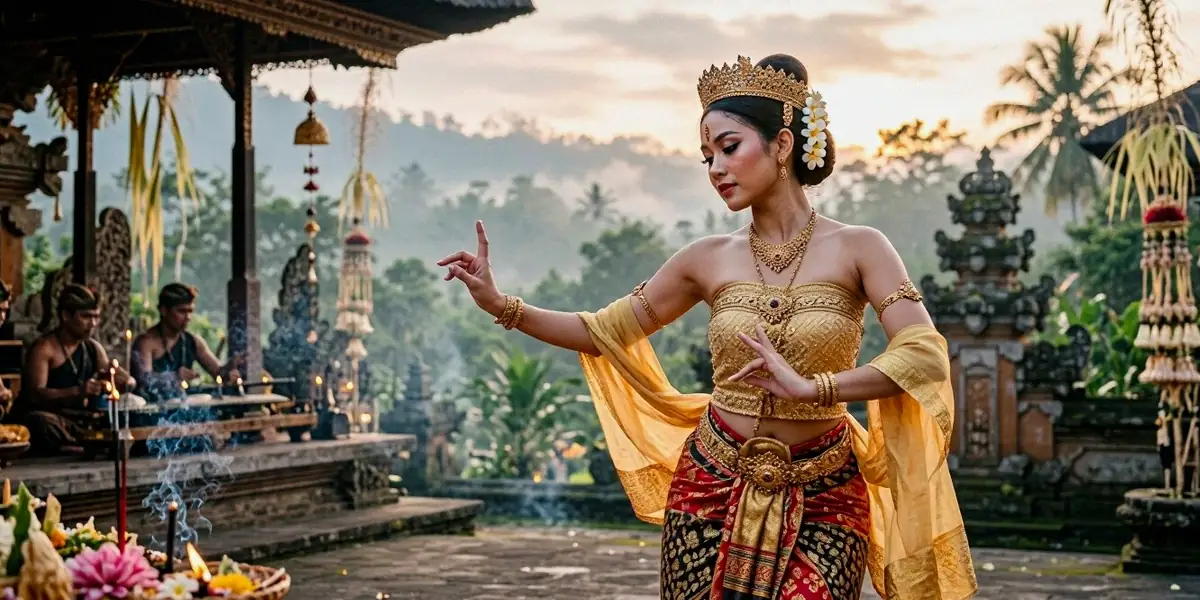
The sun drops behind the palm trees, the temple courtyard fills with the murmur of a hundred travellers, and then the first metallic notes of the gamelan ring out across the stone. We shuffle onto our cushions, the air thick with frangipani and incense, and within minutes the dancers emerge — gold headdresses catching the light, eyes darting in perfect rhythm with the drums. This is the moment that keeps pulling us back to Ubud, and it’s the moment we want to help you plan for.
Why Ubud Is the Heart of Balinese Dance
Ubud sits in the central highlands of Bali, about 90 minutes by road from Ngurah Rai International Airport. While beach towns like Seminyak and Canggu have their own cultural offerings, Ubud is where Balinese dance is studied, taught, rehearsed and performed daily. Dance schools such as Sanggar Tari in Peliatan and the many community banjar groups around town train children from a young age, and the town’s calendar is packed with temple ceremonies, cultural festivals and nightly tourist performances.
For Australian travellers, Ubud is also the easiest cultural base. Direct flights from Australia to Bali are widely available with Jetstar and Qantas, and once you’re on the ground, the town is compact enough to walk between major venues in the evening.
The Spiritual and Cultural Significance of Dance in Ubud
Balinese dance isn’t purely entertainment. Many performances are offerings to the gods and ancestors, performed during temple ceremonies called odalan. Even the nightly tourist shows draw on this spiritual lineage — the dancers are often temple-trained, the costumes are consecrated, and the gamelan music is played with the same precision you’d hear at a religious ceremony. Watching a performance in Ubud, you’re seeing a living tradition rather than a staged museum piece.
How Ubud’s Dance Scene Differs from the Rest of Bali
Elsewhere in Bali, dance is often packaged for large tour groups — big stages, amplified sound, abbreviated performances. In Ubud, the venues are smaller, the performances are longer, and the repertoire is deeper. You’ll find full-length Legong, complete Barong dramas, and Kecak performances that run well past an hour. The audience is often a mix of locals, expats and travellers, which keeps the atmosphere authentic.
Top Venues for Traditional Dance in Ubud
Three venues dominate the nightly dance scene in Ubud, and each offers a different flavour. We recommend trying at least two during your stay.
Ubud Palace: Royal Setting for Legong and Gamelan
Ubud Palace (Puri Saren Agung) sits at the main crossroads of Jalan Raya Ubud. Performances start at 7:30 PM most nights and typically feature Legong, Barong and Jauk dances accompanied by a full gamelan orchestra. The palace courtyard is atmospheric, with carved stone gates and frangipani trees framing the stage. Tickets are around IDR 100,000 (approx. AUD 10), and it’s worth arriving 30 minutes early to get a front-row seat.
Ubud Water Palace: Intimate Performances with a View
The Ubud Water Palace (Pura Taman Saraswati) is just down the road from the palace, set behind a lotus pond. The stage sits against a backdrop of water and temple architecture, and the audience sits on tiered stone steps. Legong and Barong are the usual offerings here, and the smaller crowd makes it feel more personal. Shows generally run nightly from around 7:30 PM.
Pura Dalem Taman Kaja: Community Temple with Authentic Kecak
This community temple in central Ubud is our pick for the most authentic Kecak experience. The performance includes a trance ritual, where a dancer enters a state of possession and walks across glowing coconut husks — a genuinely spine-tingling moment. The temple setting is unpolished but powerful, and the ticket price is similar to the other venues.
Must-See Dance Performances: Legong, Kecak, and Barong
Balinese dance has dozens of forms, but three stand out for first-time visitors. Here’s what to expect from each.
Legong: The Graceful Dance of the Palace
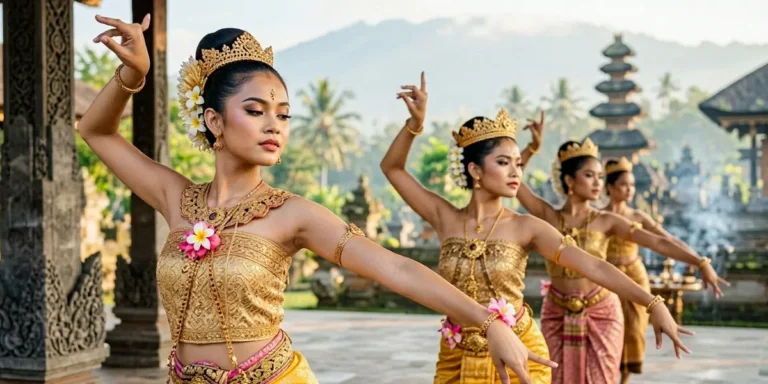
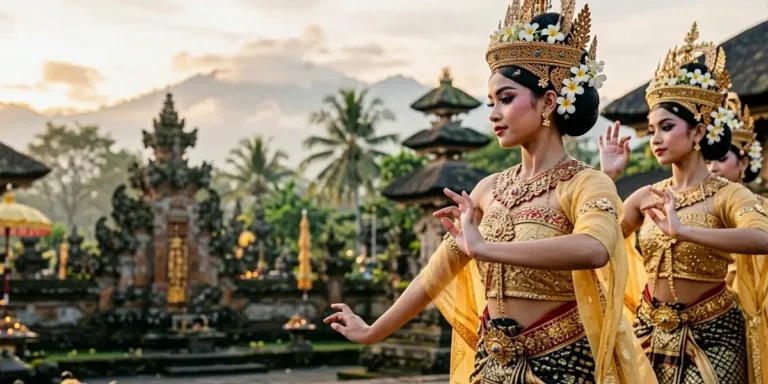
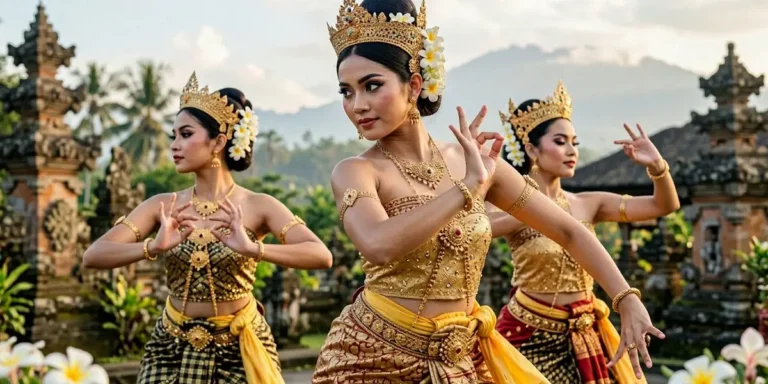
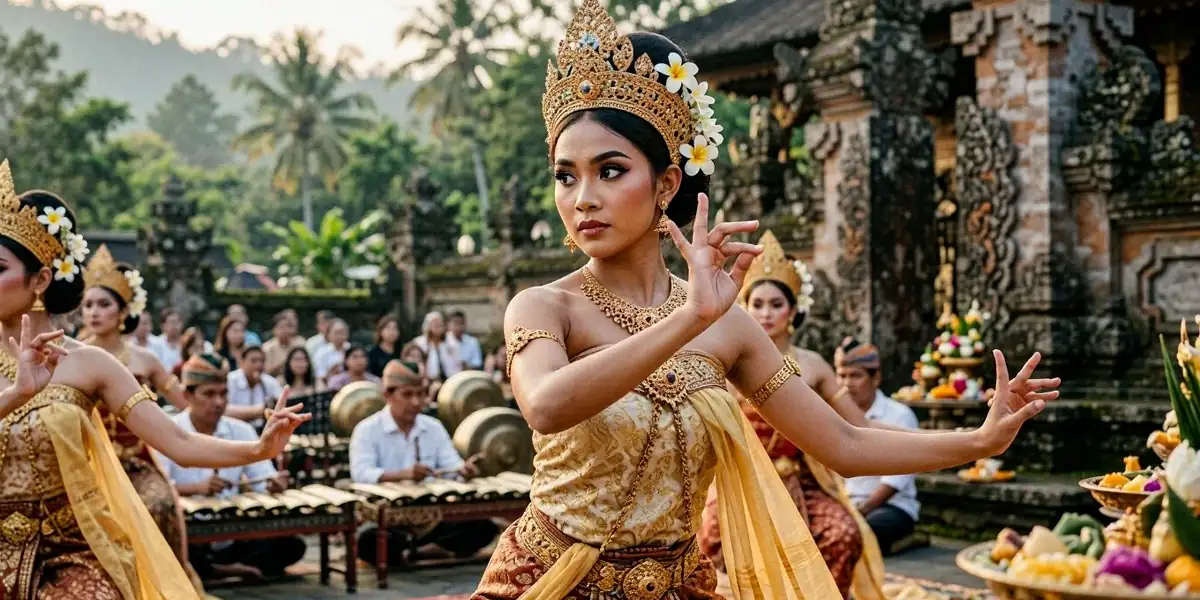
Legong is the quintessential Balinese classical dance, performed by young girls in tightly bound gold costumes. The movements are precise and almost hypnotic — flicking wrists, darting eyes, and tiny shuffling steps that seem to glide across the floor. It originated as a palace dance and is best seen at Ubud Palace, where the royal setting matches the elegance of the performance.
Kecak: The Hypnotic Chant and Fire Dance
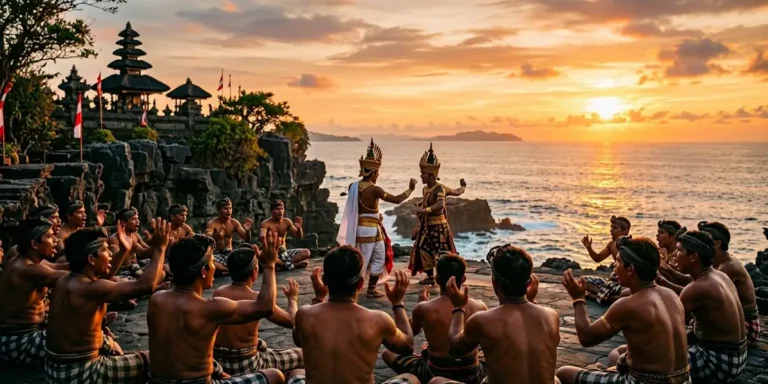
Kecak is unlike any other performance you’ll see in Bali. Instead of a gamelan orchestra, a chorus of dozens of bare-chested men provides the soundtrack, chanting “cak cak cak” in interlocking rhythms that build to a fever pitch. The story comes from the Ramayana, and the climax involves a fire dance and, at Pura Dalem Taman Kaja, a trance ritual. Bring a camera, but be ready to just sit and listen.
Barong: The Eternal Battle of Good and Evil
Barong is a masked dance-drama depicting the struggle between Barong, the lion-like protector spirit, and Rangda, the demon queen. The performance blends comedy, drama and trance, and it’s a great introduction to Balinese mythology for families. You’ll see Barong at both Ubud Palace and the Water Palace.
Gamelan: The Soundtrack of Balinese Dance
No Balinese dance exists without gamelan. The music drives the choreography, cues the dancers, and sets the emotional tone of every scene.
Understanding the Gamelan Orchestra
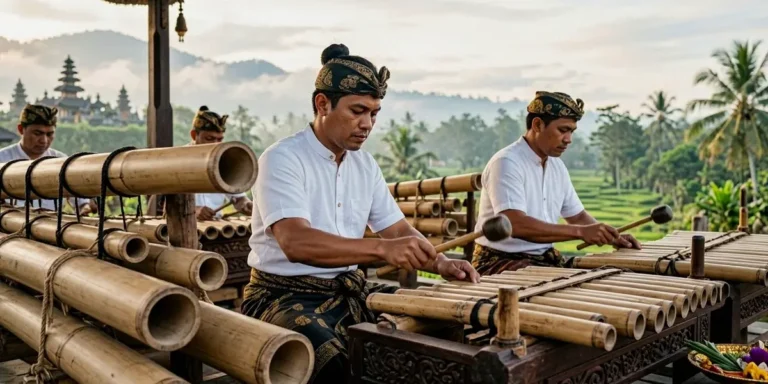
A gamelan is an ensemble of bronze metallophones, gongs, drums, flutes and occasionally strings. The instruments are typically tuned to two scales — slendro (five-tone) and pelog (seven-tone) — which give Balinese music its shimmering, slightly dissonant character. The drummer, or kendang player, leads the ensemble, while the largest gong marks the major structural points in a piece.
Where to Hear Live Gamelan in Ubud
Every major dance venue in Ubud uses a live gamelan orchestra, so you’ll hear the real thing at Ubud Palace, the Water Palace and Pura Dalem Taman Kaja. If you want a deeper dive, several local music schools offer introductory gamelan workshops where visitors can try the instruments themselves.
Practical Tips for Australian Travellers
A little planning goes a long way when it comes to enjoying Ubud’s dance scene.
Booking and Tickets: What You Need to Know
Tickets for major performances cost around IDR 100,000 (approx. AUD 10) and are usually available at the gate an hour before showtime. Some venues accept online bookings through local agents, but walk-ups are the norm. Bring cash in rupiah — ATMs in central Ubud are reliable, and currency exchange offices are plentiful.
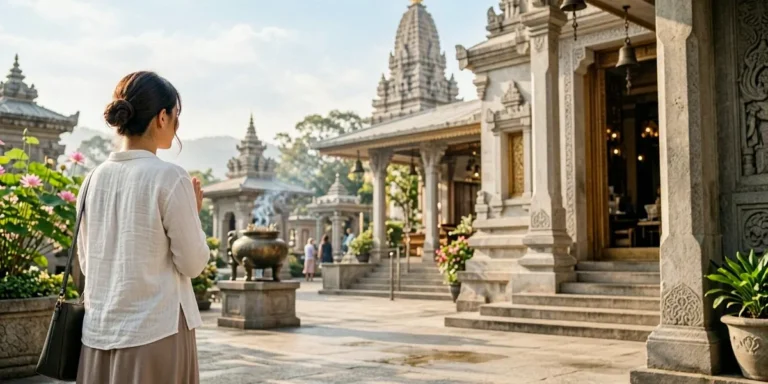
Etiquette and Dress Code for Temple Performances
These are working temples, so dress respectfully. We suggest:
- Covering shoulders and knees — a sarong and sash are ideal and often available at the gate
- Removing shoes if you’re sitting on temple ground rather than a chair
- Avoiding flash photography during the performance
- Staying seated and quiet until the show ends
- Not walking in front of anyone who is praying
Getting There and Staying Safe
Ubud is walkable, but the roads can be uneven and poorly lit after dark. Use a torch or your phone, watch for scooters on the footpaths, and consider a short Grab or Gojek ride if you’re staying outside the centre. Direct flights from Australia with Jetstar and Qantas make the trip easy, and travel insurance is worth arranging before you leave.
Our Verdict: The Best Overall Experience
If we had to pick one performance for a first-time visitor, it would be the Kecak at Pura Dalem Taman Kaja. The combination of the temple setting, the hypnotic chanting, the trance ritual and the fire dance creates an atmosphere that no other venue quite matches. That said, the Legong at Ubud Palace is a close second for pure elegance, and the Water Palace is the best choice if you want a more intimate evening.
Ubud offers a range of unforgettable dance experiences, from royal Legong to firelit Kecak. Book early, dress respectfully, and let yourself be swept up in the music — this is one of the great cultural experiences of Southeast Asia, and it’s right on Australia’s doorstep.
FAQ
What time do Balinese dance performances start in Ubud?
Most nightly performances at Ubud Palace and the Water Palace start at 7:30 PM. Arrive by 7:00 PM to secure a good seat.
How much do tickets cost for Balinese dance in Ubud?
Tickets for major performances cost around IDR 100,000 (approx. AUD 10). Cash in rupiah is the easiest way to pay at the gate.
Which dance should I see first — Legong, Kecak or Barong?
If you only have one night, choose Kecak at Pura Dalem Taman Kaja for the trance ritual and fire dance. If you have two nights, add Legong at Ubud Palace.
Do I need to dress modestly for temple performances?
Yes. Cover your shoulders and knees, and wear a sarong and sash if you’re sitting on temple ground. Sarongs are often available at the venue entrance.
Are there direct flights from Australia to Bali?
Yes. Jetstar and Qantas both offer direct flights from Australian cities to Denpasar, making Ubud an easy add-on to any Bali holiday.